Showing posts with label jose antonio ocampo. Show all posts

Saturday, 24 January 2009

DESA's Seoul Center plunged into scandals

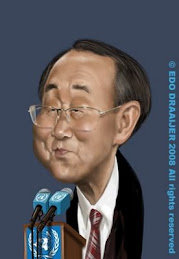
During a recent visit of Ban Ki-Moon in Seoul, South Korea (July 3, 2008) he stated that his purpose of visit to Korea was to encourage Korean government to contribute more to international community, and underlined importance of further active roles of UN Family in Korea will get essential. 

At the end of his meeting in Seoul, little Ban would know that he was about to take a happy family photo with a rather disturbing and scandal embroiled branch of his own organization - called : United Nations Governance Centre (UNGC - http://www.ungc.org/)

Click in the picture for larger image

To be fair to Ban Ki-moon, UNGC was established on June 23, 2006, almost six months before Ban Ki-moon was appointed Secretary General. Eventhough the timing and selection of Seoul as the center of good governance for Asia would have left many in the region skeptical and think that it was just a move of South Korean government to strengthen their "candidacy" for the post of Secretary General (Ban Ki-moon was running for SG job at time of announcement).

In the agreement reached between DESA and GoSK (Government of South Korea), the goal of the United Nations Governance Centre (UNGC) is to act as an international and regional focal point for research, training and advocacy in government reinvention, and its functions will be oriented towards addressing information requirements of public officials, civil society, and the private sector. In the initial stages, UNGC would focus on e-government, government innovation, citizen participation, and public ethics in terms of research, capacity development, consulting and support activities.

on the opening day

All the above looked "very promising" if DESA ought to entrust the centre to anyone else other than Guido Bertucci, John Mary Kauzya and Elia Armstrong, who as usual would corrupt anything they would touch and manage on their way.

A very recent secret report from DESA's Executive Office details a massive abuse of power, UN immunities - including abuse with tax-deduction and other UN perks for SK Government officials as well as corrupt procurement practices and commitment of funds without any procedural approval from HQs.

While many at 23rd floor are "committed to secrecy on Seoul center" due to "sensitivity" it bears from Ban Ki-Moon being a south korean, the scandal has now become a heavy one, that even ASG Jomo has admitted that the center should be "shut down, or if it should continue it should not under DESA's flag".

With UNGC being the second scandal of DESA's centers in the world (UNTC - Thessaloniki Centre was the first one) now we wonder what would be the status of other centers of DESA ?


Monday, 8 September 2008

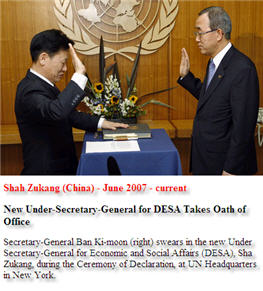
CHANGE UN-DESA NOW MR. SHA

Millions of dollars in fraud and embezzlement on a global scale. The UN-DESA's DPADM, formed to “save public administration and good governance around the world,” has instead become more like a movie that is too graphic to show our children.

In the last 5 years, the reputation of the UN-DESA has been shredded by allegations of kickbacks, hundreds of thousand of dollars in graft in the Bertucci scandal, the miss-management and corruption in Associated Expert Programme, and a total lack of accountability.

We hope Mr. Sha that you know that it’s time for serious reform, for serious change.

The OIOS and Procurement Task Force report on Guido Bertucci scandal, which was finally released at the end of June 2008, is still being kept by USG-DESA office without any proper feedback to the Greek Government and OIOS. Criticizing the UN-DESA and specifically DPADM from top to bottom, the language of the report was crystal clear: “The inescapable conclusion from the OIOS’s work” is that the UN-DESA “needs thorough reform—and it needs it urgently.” We will see exactly how serious the lapses in judgment were at every level.

We question ourselves how did things go so terribly askew? What’s wrong with the UN-DESA?

Guido Bertucci Scandal: - As the OIOS investigated Greek Project, it uncovered another, related scandal.

Guido Bertucci, was miss-managing and abusing UN-DESA funds and projects to pay friends and family relatives.

This fourth OIOS report into DESA/DPAM operations, ended up fingerpointing Guido Bertucci, Jose Manuel Sucre and John Mary Kauzya on miss-management, and gross-negligence. The report asked the Secretary General to have Guido Bertucci reimburse at least 35,000 USD from his Pension/Salary to the UN.

But if Guido Bertucci and Jose Manuel Sucre, with the collaboration of Catherine Pelluso and Furio De Tomassi, are responsible for 35,000 USD in one single project, how much would they be responsble towards 281 projects that Guido Bertucci's shop managed during the past years?

Guido Bertucci didn't pay himslef his friends or family relatives. He was better than that. All payments and contracts were generated from the Techincal Cooperation Division headed from Marie Oveissi ( a former G - who became a P and than a D), and all contracts were cleared from Catherine Pelluso (another former G - who became a P and a D) of the Executive Office prior to execution and disbursement.

The biggest problem with this scandal is its scope: The Technical Cooepration department touches every program at the UN-DESA (it is through procurement contracts of services and goods that the UN-DESA spends the billions of dollars its members contribute). These men and woman specifically wielded a lot of influence. Line items in the UN-DESA budget were judged by Patrizio Civili and signed from Catherine Pelluso. Guido Bertucci worked in the UN for over over 30 years and dealt with contractors in Africa, Asia and the Middle East—all over the world.

This report is only the beginning of series of OIOS reviews that have initiated. But what's more important, Member states are now worried of what's really going on inside UN-DESA, and the current management ability to promote substantial and qualitative change.

In the report, which was based on more than 12000 document/emails, the OIOS speak about the UN-DESA’s reputation and the connection with its ability to function effectively: “At stake is the United Nations’ ability to respond promptly and effectively to the responsibilities thrust upon it by the member states. In the last analysis, that ability rests upon the organization’s credibility—on maintaining a widely held perception among member states of its competence, honesty and accountability".

“It is precisely those qualities that too often were absent in the administration of the DPADM and ultimately at the 23rd floor.”

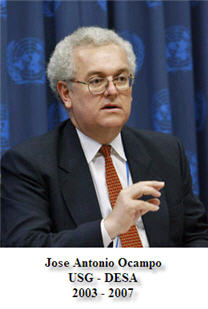
This scandal happened under USG Ocampo’s watch. But most importantly was micromanaged by Patrizio Civili who had a direct interest vetted inside DPADM, and why not he was following the directives from a specific country to undermine another.

The scandals discussed here are the UN-DESA at its worst; but any honest analysis shows that the United Nations's Department of Economic and Social Affairs was a failure even without the “Guido Bertucci” scandal or the Associate Expert scandal from Technical Cooperation Division.

What went wrong ?

Men acted according to their own human nature. Patrizio Civili acted according to his interests; Catherine Pelluso acted according to her interests, Guido Bertucci acted according to his interests, Furio De Tomassi acted according to his interests, Elia Armstrong acted according to her interests; and friends and family members were looking for profit. Rather than following God’s way of love—of out-flowing concern—these men/woman were looking out for number one—themselves!

Jeremiah 17:9 tells us the heart is deceitful above all things and desperately wicked. Greed affects every level of society. Even when we see an organization that should embody ethics, morality, and the highest standard of human virtue as an example to the entire world, we see instead a perfect depiction of human nature at its worst. Instead of a godly, righteous institution, we see a carnal one.

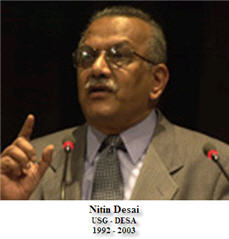
Rather than effective management at the top, the UN-DESA has had no true leadership (so far). DESA's USG (Desai/Ocampo) have proven both that they were not up to the task and that they were unwilling to step down—or even to replace those beneath them when they fail.

YES the answer is YES, Mr. Sha.......We need change NOW !!!!!

Wednesday, 3 September 2008

Ban Ki-Moon : and..... the buck stops..... where?


" In Turin , at a meeting of Chief Executive Officers of UN Funds, the Secretary-General addressed the need for "change".

"People forget" , he argued , that "we are here to act. We are here to deliver results. We are the agents of change". Specifically, he added:- " Our job is to change the UN -and through it, the world." Not a small job, you would say. But how is the SG going about this task?

The SG feels "frustrated "; frustrated by "micro-management " in the UN Secretariat and by "resistance to change". For this, part of the blame, he traces back to governments of Member States; part to his senior managers, who are in cohoots with the very same governments.

Frankly , the time has come for the SG to accept his own share of the blame. He should remember Truman who, proudly in his Office, displayed the sign: - "The Buck Stops Here". Likewise, with the SG, it stops on the 38th floor.

The UN needs a leader. "I tried to lead by example" Mr. Ban Ki-Moon lamented, but "Nobody followed". He needs to be reminded that no one is a leader until his example is followed; and it is followed only when he has made it clear that he means what he says. This is hardly, one might add, the impression senior managers at the UN have formed of Mr.Ban Ki-Moon.

Actions speak louder than words; and lack of action likewise. More than a year ago, on August 27th, the Council of Representatives of all the UN staff passed a landmark resolution drawing the SG's attention to the "culture of impunity" , rampant in the upper echelons of the Organization. It called on the SG to put his house in order.

However, one year later, has anything changed ? Hardly.

Talking of "micro-management", Past Master of the art, Director Guido Bertucci, Head of DPADM--now better known, in jest as the "good governance division" --was allowed to retire with full honors, although he stood accused of maladministration as well as gross mismanagement by three successive audits between 2003 and 2007.

Among the latest charges leveled against Bertucci --which were leaked to the Press (Washigton Times- June 12th 2008) was blatant obstruction of justice by Bertucci and his entourage. Plainly stated the Director and his close associates refused to cooperate with the Investigation and sat on the report, which had been sent for comments--until it was too late...When the SG, under pressure, remanded Mr .Bertucci for disciplinary action, it was-too late. Bertucci-was retiring on July 31st, and could no longer be touched. His acolytes remain. Two also stand accused with their departed boss. A third, however, who served in the Director's Office, as his "right hand" and probably colluded in his protracted obstruction, was recently promoted to be --no I am not joking -- the new Ethics Director (D1) of the UNDP (Ms. Elia Yi Armstrong).

Worse still for Mr. Moon, the Officer in question is of his nationality.

The Secretary--General may want to impress the world with his "philosophy of life"; with statements like "giving is gaining". But if he allows examples like these to multiply and culprits like Bertucci to run away with their ill-gotten gains , the Secretary-General might well kiss "change" good-bye.

Sunday, 10 August 2008

Letter to Secretary-General: Corruption and missmanagement at the United Nations

LETTRE OUVERTE AU SECRETAIRE GENERAL DE L’ORGANISATION DES NATIONS UNIES

Monsieur le Sécrétaire Général,

Je viens par la présente vous exposer ce qui suit:

La situation des fonctionnaires en général et en particulier celle des Africains est dramatique . Les africains sont victimes d’une discrimination au sein du système en général et en particulier dans le DPKO/FDS/PMSS . Cette discrimination est orchestrée par deux fonctionnaires à savoir : Mme. DONNA MARIE MAXFIELD sa collaboratrice CATHERINE ROLLAND et cela avec la bénédiction de leur Chef hiérarchique et la complicité de certains de mes collègues ici dans le DFS. Il y a environ 16 ans que je travaille au DPKO avec aujourd’hui son nouveau Departement DFS . Chaque jour qui passe devient insupportable et un calvaire de constater l’injustice, la brimade sans que personne n’ose faire quelque chose.
Il y a plusieurs mois de cela je causais devant le bureau de Mme. DONNA MARIE MAXFIELD avec sa Sécrétaire qui est ma collègue. Je l’ai entendu dire à son interlocuteur au téléphone que si tout dépendait d’elle , les africains n’allaient jamais avoir des postes de responsabilités au sein du système. Je dois aussi vous confesser qu’à plusieurs reprises j’ai reçu des instructions de Mme. DONNA MARIE MAXFIELD d’établir la liste des candidats pré-selectionnés favorisant ainsi les candidatures des blancs dont les pays sont contributeurs. C’était quand elle était encore Chef au DFS .Tous regrettons le départ de Mr. Luiz Da Costa du DPKO.

Ces deux fonctionnaires font la pluie et le beau temps au DFS aujourd’hui elles sont à l’origine de la destruction de plusieurs foyers et familles . Plusieurs dossiers sont bloqués par le DPKO/DFS/PMSS tout simplement parce qu’ils sont des candidats Latinos et africains dont la plupart sont francophones.
Les interviews à ces candidats sont faites en anglais avec le simple objetif d’empêcher les candidats potentiels francophones et faciliter l’hégémonie des anglophones dans le système .
Plusieurs postes sont vacants il y a environ deux ans. Ces postes exigent le recrutement les candidats qualifiés qui parlent français pour servir en Côte d’Ivoire, au Tchad, en République Centrafricaine, au Burundi, en Haiti etc….Jusqu’à présent, il est inadmissible de croire que le DFS est incapable de recruter les francophones, donnant comme argument qu’ils ne sont pas valables. Cela constitue un grand mensonge car Mme DONNA MARIE MAXFIELD et Mme. CATHERINE ROLLAND ont toujours compliqué le recrutement des africains et facilité celui de leurs connaissances, des personnes qui n’ont parfois aucune experience ni dans la substance ni dans la logistique . C’est le cas du Canadien MARCEL SAVARD . Ce dernier était Chauffeur de camion retraité dans l’armée canadienne , il a été recruté aux Nations Unies comme Chef de l’Administration pour servir dans les Missions de Paix . Toutes les missions où il a travaillé , il a fait le bordel en recrutant non seulement ses compatriotes mais aussi ses connaissances, ses amis et proches qui n’avaient aucune experience pour servir dans les missions et passaient leur temps à l’Internet à visionner les films pornographiques. Cela s’est passé à la Mission des Nations Unies en RDC et au TPIR ( Tribunal Pénal International pour le Rwanda ) . Au TPIR , les enquêteurs Canadiens inventaient même les missions juste pour se faire des sous , tout se faisait avec la bénédiction et la complicité du Chef de l’Administration Mr. SAVARD .

Quels bons résultats peut-on s’attendre d’une mission quand la médiocrité et l’imbécilité priment sur la connaissance et le savoir? Quels bons résultats peut-on espérer quand tout se passe à base du Q.I. c’est-à-dire Qui Indique. Aux Nations Unies en général et en particulier au DFS il faut être indiqué pour faciliter le recrutement .

Juste pour citer un autre exemple à DESA, lors de la sélection d’un candidat au poste de P4, le postulant retenu par le panel était un français nommé BRUNO. Vous avez intervenu en imposant à ce Département le recrutement d’une Koréenne nommée KIM qui venait en 2eme position et pourtant elle n’était pas la meilleure candidate .Le français lui s’est contenté d’un contrat à compte-gouttes c’est-à-dire 2 à 3 mois. Le cas d’injustice contre un français dont le pays est membre Permanent au Conseil de Sécurité démontre clairement que s’agissant d’un africain le problème est plus grave car il n’aura personne pour plaider son cas. On note que l’africain est la risée de tout dans le système.

Je tiens à vous rappeler que tous les Français et autres francophones qui travaillent dans le système y sont par leurs mérites.

Je sais qu’en tant que Sécrétaire Général de cette organisation, vous avez le droit de nommer qui vous voulez à un poste mais, vous n’avez aucun pouvoir d’aller à l’encontre de la décision d’un panel mis en place pour décider sur le recrutement d’un candidat. En agissant ainsi vous avez violé un des principes élémentaires du règlement sur le recrutement des fonctionnaires. Votre attitude constitue un abus de pouvoir.

Il important de souligner qu’il existe aujourd’hui dans le système plusieurs reseaux organisés par pays à savoir: l’Inde, le Japon, la Chine, les Philippines, L’Angleterre, le Cameroune, le Sénégal, les USA et la Korée du Sud évidamment ce dernier a gagné du terrain ces derniers temps avec votre nomination à la tête de cette organisation. Vous avez parfaitement raison car, on dit qu’on gouverne mieux qu’avec les siens. Aujourd’hui nous assistons à une Koréanisation du système en général et en particulier du 38eme étage. Quant aux restes c’est-à-dire certains africains non organisés, arabes et latinos etc….eux, tiennent la queue de la vague . Ils sont traités par le DPKO/ DFS/PMSS comme des chiens qui sont à côté des patrons à table et attendent qu’ils finissent pour manger les restes.
Comment ces reseaux opèrent? Par exemple: Dès qu’un poste se libère dans un Département ou une Division, le Chef de ce Departement ou de cette Division fait tout le possible pour que le poste vacant soit occupé par un candidat de la même nationalité que celui qui l’occupait . L’occupation du poste est plus facile si le candidat est un compriote du Chef du Département ou de la Division.

Un cas flagrant d’injustice vient à peine de se passer au Bureau des Affaires Juridiques (OLA) Section des Traités . Le règlement dit que chaque stagiaire ou consultant doit attendre 6 mois après la fin de son contrat pour postuler. Il s’avère qu’un Consultant externe de nationalité Indienne nommé HEMMETT travaillant à OLA a été récruté sans que le delai requis soit respecté ; tandis que l’Africain nommé CYRILLE MOMO qui occupait ce poste lui avait été limogé pour soit disant manque de budget, argument avancé par le Chef de ce dernier. Il n’y a pas eu de budget pour payer un africain mais, tout de suite le budget a été trouvé pour payer l’Indien . Toute cette magouille a été faite avec la complicité de Mme. PADMA de nationalité Indienne . Elle est Directrice Exécutive au Bureau des Affaires Juridiques.( Deux poids deux measures )

A la Mission des Nations Unies au Tchad par exemple le Chef du TRAVEL UNIT est un Palestinien et le CCPO est une Libanaise. Nous assistons aujourd’hui à une LIBANISATION et à une PALESTINISATION de cette mission; on compte du doigt les africains francophones. “La mise en place d’une mission en Afrique sans les propres africains , c’est aimer l’Afrique sans les africains”. Ne soyez pas surpris si un jour cette mission est infiltrée par des extrémistes . Ce qui pourra resulter à des attentats terroristes contre les locaux des Nations Unies. Juste pour vous rafraîchir la mémoire souvenez-vous de l’attentat contre l’Ediffice des Nations Unies en Iraq qui a causé la mort de plus de 20 personnes parmi eux Mr. SERGIO VIERRA DE MELLO qui était cogité pour être le successeur de KOFI Annan.
Situation aussi écoeurante est celle qui s’était passée à la Mission des Nations Unies à ONUCI-Côte d’Ivoire. Le DPKO avait envoyé comme Chef du Personnel Mr. HECTOR FUENTE de nationalité Vénézuelienne. Mr. FUENTE faisait semblant de parler et d’écrire français. Il était incapable de rédiger une phrase correctement tant en français qu’en anglais tout le travail était fait par son Assistante Administrative une Ivoirienne. Quelle honte pour le système. ( C’est juste un cas parmi d’autres ). Tout cela démontre la légèreté patente avec laquelle le DPKO/DFS/PMSS traitent les dossiers . Mme. DONNA MARIE MAXFIELD et Mme. CATHERINE ROLLAND savaient très bien les lacunes et les faiblesses de Mr. FUENTE mais, comme ce dernier était l’un des leurs, aucune décision n’avait été prise pour remédier à cette situation.

Il est important de se poser la question de savoir pourquoi ces deux fonctionnaires détestent tant les africains et d’où vient cette haine viscérale ?

Mme. DONNA MARIE MAXFIELD a commencé dans le système comme simple Sécrétaire, aujourd’hui elle est D2 ( de G2 à D2 ) comment a-t-elle fait , Dieu seul sait . Elle n’a aucun diplôme supérieur pour occuper ce poste , elle n’a pas fait de longues études. Elle a gravi les échélons en piétinant ses collègues. En réalité Mme. DONNA MARIE MAXFIELD sortait avec un fonctionnaire des Nations Unies qui était P4 , ce dernier l’aurait aidé à passer de G2 à professionnelle. C’est incroyable et inadmissible de constater ce genre pratique sordide au sein cette organisation. Ne cherchons pas trop à savoir ce qu’elle a fait et comment elle a fait pour atteindre le grade D2. En tant que femme je sais que nous avions une force qui se trouve entre nos jambes. Plusieurs fonctionnaires très qualifiés et ayant fait des études supérieures sont partis à la retraite avec des grades de P4 , P5 les D1 sont rares. D’autres sont même sous-employés c’est le cas de ma collègue Haitienne qui est juriste de formation et Avocate de profession, aujord’hui elle se retrouve comme Sécrétaire ici au DFS 9eme étage. Elle noire et non blanche. Mme. DONNA MARIE MAXFIELD était même dans ses débuts de carrière aux Nations Unies au centre d’un scandale car, elle était la petite maitresse d’un diplomate Iranien qui était marié . Ce dernier ne voulant plus continuer la relation avait décidé de mettre fin . Ce rejet a provoqué une grande déception et une haine envers les africains et les arabes. Quels leçons de morale peut-elle donner à d’autres fonctionnaires? Comment quelqu’un qui a un passé aussi dégueulasse dans le système a pu devenir D2 . Il est aussi important de souligner que Mme. DONNA MARIE MAXFIELD est très arrogante et détestée par ses proches qui font semblant d’accepter et supporter ses états d’humeur . Même ma collègue K.Pierre qui était sa Sécrétaire était oubligée de changer de Division car elle ne supportait plus le mauvais traitement que l’inflgeait Mme. DONNA MARIE MAXFIELD. Elle n’a aucun respect envers ses collaborateurs . C’est une sournoise qui détruit les fonctionnaires . Aujourd’hui elle vient d’être nommée Chief of Staffs servant de liaison entre le DPKO et le DFS. J’observe que de cacophonies en cacophonies ce departement avance .

Mme CATHERINE ROLLAND n’a pas aussi fait des longues études . Elle est très connue pour ses magouilles qui consistent à favoriser ses proches. Elle a aussi la réputation d’avoir un homme à chaque Mission où elle travaille. A la mission des Nations Unies en Haiti elle sortait avec son collègue de mission WALLACE DIVINE d’origine camerounaise mais de nationalité americaine marié et père de famille. Il est actuellement le Chef de l’Administration de la mission des Nations Unies en Côte d’Ivoire-ONUCI. Le propre WALLACE DIVINE me l’avait confirmé quand nous étions en Haiti où j’avais aussi travaillé pendant un an . A la mission des Nations Unies en RDC elle sortait avec un autre africain qui avait aussi décide de mettre fin à leur rélation. Ce rejet a provoqué une haine vis-à-vis des africains. On observe que cette française avait un penchant pour les Blacks.

On note clairement que les problèmes de sexe, de fesses, de romance etc… sont à l’origine du malheur de plusieurs africains au sein du DPKO/DFS/PMSS. Je suis d’accord quand on dit l’amour n’a pas de frontières mais, je ne partage pas le fait que la rupture d’une rélation devienne un motif de haine contre une race, un peuple, une communauté.

Que dira-t-on de Mr. SIMON MUNZU marié père de famille, actuel Chef de la division des droits de l’homme à l’ONUCI- Côte d’Ivoire qui a enceinté sa collègue de mission

Où se trouve l’Intégrité, le professionnalisme, le respect à la diversité que cette organisation a toujours prônée? On note un manque de décence, de scrupule et on observe une forte présence de crapules dans cette organisation.

Concernant cette Mission il est important de rappeler qu’elle a un budget annuel de 600 millions de Dollars pour payer des fonctionnaires qui ne font absolument rien . Des vacanciers qui passent leur temps aux plages d’Abidjan.

S’agissant toujours de cette mission, vous avez supplié le Président LAURENT GBAGBO pour qu’il accepte la nomination de votre ami Mr. YOUNG-YIN CHOI à la tête de cette mission en remplacement de Mr. CHORI, alors que Mr. ABOU MOUSSA faisait du bon travail. Mais comme il fallait placer votre ami qui était Ambassadeur de votre pays aux Nations Unies ( la Korée ) et s’était retrouvé sans rien chez lui, vous lui avez trouvé une place. Aujourd’hui qu’a-t-il fait de plus qu’ABOU MOUSSA n’avait pas fait ?

Le comble est que ni Mme. DONNA MARIE MAXFIELD et son acolyte Mme. CATHERINE ROLLAND ni les fonctionnaires chargés d’analyser les dossiers des candidats n’ont pas fait des études très approfondies par conséquent n’ont aucune notion de ce que représente un doctorat , une maitrise etc…Quelle évaluation peut-on s’attendre de ces fonctionnaires qui sont chargés de faire le TC .

Les postes sont parfois publiés juste pour la forme . En réalité ils sont souvent déjà occupés avant même la publication. Les candidats externes non avisés continuent toujours à postuler pendant des années sans le savoir.

Certains candidats qui, ayant déjà servi le système et postulant pour revenir, sont aujourd’hui marginalisés parfois sur base d’erreurs subjectives, parfois sans aucune justification valable. Il sont victimes du fameux drapeau rouge ( Red Flag ) sur leur dossier ce qui empêche leur recrutement .

Au DPKO/DFS/PMSS et dans bien d’autres departments ou divisions, les fonctionnaires sont tenus d’observer certaines règles et notamment d’obéir aveuglement aux ordres qui leur sont donnés, même si ceux-ci paraissent totalement arbitraires. Beaucoups préfèrent cependant se taire soit par crainte de réprésailles, soit parce qu’ils estiment n’avoir aucune chance d’obtenir gain de cause.

La nouvelle procedure de recrutement adoptée par le DPKO stipule que c’est la Misson qui prend la décision finale pour recruter un candidat mais, elle ne peut que décider qu’en se basant sur la liste qu’elle reçoit du DPKO. Faudrait-il encore que votre nom soit sur la liste. Même si votre nom y figure et si dans la Mission vous n’êtes pas apprécié pour une raison ou une autre par l’un des fonctionnaires des services du personnel ou de l’Administration, votre candidature est rejetée. Tout passe par le Chef de l’Administration qui souvent agit de connivence avec le DPKO/DFS/PMSS pour faciliter le recrutement de ses préférés. Certains fonctionnaires membres du panel orientent leurs candidats à gonfler le cv afin qu’il soit uniforme avec la description du poste dont ils font objet de candidature.

On observe qu’en dehors de la compétence exigée mais qui n’est toujours pas tenue en compte , le processus de recrutement est soumis à des pratiques frauduleuses qui vont à l’encontre des propres valeurs de l’ONU basées sur la transparence, l’équité, l’intégrité, le professionnalisme , le respect de la diversité.

Je pense qu’il est temps de trouver une solution urgente . Il y a lieu de revoir la situation de tous les fonctionnaires en général et en particulier de tous les Chefs de Departements ou Divisions qui passent leur temps à bloquer les jeunes fonctionnaires qualifiés . Il serait nécessaire d’injecter du sang nouveau, avec des nouvelles idées, une nouvelle conception du MANAGEMENT. Le monde a changé, nous sommes à l’époque de la globalisation.

Chaque année l’ONU reçoit des stagiaires venant de tous les coins du monde . Ils possèdent une grande diversité d’expertise et compétences. Ils travaillent comme des robots sans être rémunérés. Dans certains departments le travail qu’on les donne est de faire les photocopies des documents à longueur de journée.

Il est aussi important de souligner que les africains sont parfois à l’origine de leurs malheurs . Juste pour citer un exemple, contrairement à plusieurs Ambassadeurs qui interviennent auprès du Sécrétare Général pour le recrutement de leurs ressortissants dans le système, le Représentant Permanent du GABON qui a fait 20 ans à ce poste n’a absolument rien fait pour le recrutement d’un seul gabonais . Ces informations m’ont été livrées par l’un de ses proches collaborateur le Conseiller FRANKLIN JOACHIM MAKANGA qui se trouve actuellement au Gabon . Ce dernier se dit intouchable pour être très proche de la famille Présidentielle et pour avoir rendu beaucoup de services au Chef de l’Etat Gabonais. Quels sont ces services ? Le Gabon ne devait pas être fier de cet Ambassadeur. Il faut aussi souligner que Mr. MAKANGA est très connu dans son milieu comme un fiéffé menteur.

Il existe dans le système des africains noirs blancs, blancs noirs. C’est le cas de KOFI Annan. qui a eu deux mandats mais n’a rien fait pour ses frères. C’est aussi le cas de bien d’autres comme: Djibril Diallo ( Sénégal ), Patrick Hayford ( Ghana ), Raul de Mello Cabral ( Guinée Bissau ), Nyaguthie Ngetha-Mungai ( Kenya ) etc... ces derniers passent leur temps à détruire les africains dans le système.

Je fais ici un appel pressant à tous les amants de la paix qui aiment cette organisation, à tous ceux qui militent contre la discrimination raciale, à tous les responsables de l’Union Africaine, de l’Union Européenne etc… qu’ils agissent afin de trouver une solution du problème sur la discrimination raciale, l’injustice au sein l’Organisation des Nations Unies.

Les cas d’injustices cités dans cette lettre vont nous permettre de tirer des leçons . Lorsque les règles démocratiques sont ignorées et qu’il n’existe pas de justice capable d’assurer la protection, les personnes qui en souffrent le plus sont celles qui peuvent le moins se permettre de perdre. La création d’une infrastructure de lois, de droits, d’une mise en application et d’une justice n’est pas seulement un projet abstrait qui interessent seulement les rhétoriciens, les sociologues et les politologues. La mise en place de telles institutions peut faire la difference entre la vulnérabilité et la sécurité, le désespoir et la dignité pour tous.
Je voudrais à travers cette lettre attirer votre attention et tenter de vous sensibiliser afin de sauver cette organisation. La création d’un sens de responsabilité mutuelle répresente l’une des clés de la lutte contre l’injustice au sein de notre organisation ce qui constitue un défi pour tous. J’espère que cette lettre permettra avec ses recommandations de montrer la voie vers un but et un avenir meilleur et plus équitable pour tous.

Aujourd’hui, vous savez très bien aussi de la situation qui porte sur la MAFIA au sein de DESA. Le scandale de corruption dont trois fonctionnaires de ce departement sont impliqués, à savoir: Mr. BERTUCCI, Mr. KAUZYA et Mr. SUCRE-CIFFONI. Je tiens à vous rappeler que j’ai toutes les informations nécessaires concernant ce cas .

Je profite de cette occasion pour tirer mon chapeau à tous les Lusophones qui travaillent dans cette Organisation et s’expriment très bien tant en français qu’en anglais, bien que le Portugais ne soit pas encore une langue officielle des Nations Unies.

Sur ce je crois que vous conviendriez avec moi que la situation des fonctionnaires en général et en particulier africains dans le système est critique et qu’il y a lieu de trouver une solution urgente afin de remédier à la même et éviter le pire. Comme on dit, “le linge sale se lave en famille” . Je vous prie de prendre au sérieux toutes ces informations. Je ne suis pas une ennemie du système mais une amie. L’ami c’est celui qui vous dit les vérités .

Recommandations:

1-Démission de Mme. DONNA MARIE MAXFIELD et CATHERINE ROLLAND etc..
2-Mise en examen de Mr. SIMON MUNZU

3-Mettre en place un bureau special chargé d’analyser les dossiers et cela en tenant compte de la répartition géographique qui n’a jamais été respectée par les Nations Unies.

4-Retrait inconditionnel des drapeaux rouges qui se trouvent sur les noms tous les candidats qui ont été écartés du système sans aucune justification valable.

5-Recrutement de tous les candidats potentiels francophones pour servir dans les Missions dont la langue officielle du pays est le français .

6-Pas question de faire des interviews aux candidats francophones en anglais. Les interviews doivent se faire en respectant les langues officielles de chacun surtout si elle est aussi la langue officielle des Nations Unies.

7-Respect à tous les fonctionnaires africains, latinos, arabes etc….

8-L’ouverture d’une enquête sur le comportement discrimitoire au sein du système.

9-Revoir la situation des stagiaires, il n’est pas question de les faire travailler comme des robots sans aucune rémunération. Il faut voter un budget special afin qu’ils puissent au moins garantir leur loyer, transport, logement et restauration. Si les Nations Unies gaspillent plus 600 millions pour payer des vacanciers de l’ONUCI en Côte d’Ivoire, ce n’est pas un million de dollars qu’on peut utiliser pour payer ces stagiaires qui feront tomber l’organisation en faillite.

10-Démission de tous les fonctionnaires qui sont impliqués direct ou indirectement dans le scandale de corruption à DESA .

11-Démission de Mme. PADMA Directrice executive au Bureau des Affaires Juridiques.

12-Rcrutement urgent de Mr. CYRILLE MOMO qui a été victime d’une injustice.

Très haute consideration.


Alice Gervais
Personnel Assistant DFS
9th Floor room 0928 DC 1


Copies:
Ms. Migiro Asha-Rose
Vice-Sécrétaire Générale
Ms. Susanna Malcorra
Under-Secretary General
Mr. Mulet Edmond
Assistant du Sécrétaire Général
Mr. Titov DIMITRY
Mr. Duarte Sergio de Queiroz
Haut Répresentant pour le Désarmement
Mr. Sha
Sécrétaire Général Adjoint des Affaires Economiques et Sociales.
Mme. Catherine Pollard
Mr. John Holmes
Sécrétaire Général Adjoint pour les Affaires Humanitaires
Assistant du Sécrétaire Général
Mr. Won-Soo Kim
Mr. Menkerios Haile
Mr. Ngonlardje Mbaidjol
Directeur OHCHR-New York
Mr. Sammy K. BUO
Directeur Division Afrique II
Union Africaine.
H.E. Mrs. Lilia Hanitra Ratsifandrihamanana
Ambassador
Communauté Europeenne
H.E. Ms. Sanja Stiglic Permanent Representative of Slovenia
H.E. Mr. JEAN-Maurice Ripert Permanent Representative of France
H.E. Mr. Ismael Abraào Gaspar Martins
Ambassador Extraordinary and Plenipotentiary Permanent Representative
of Angola .
H.E. Mr.Antonio Pedro Monteiro Lima.
Ambassador Extraordinary and Plenipotentiary Permanent Representative
of Cape Verde.
H.E. Mr. Alfredo Lopes Cabral
Ambassador Extraordinary and Plenipotentiary Permanent Representative
of Guinea-Bissau .
H.E. Mr. Moussa Makan Camara.
Ambassador Permanent Observer.

Friday, 25 July 2008

Greek Parliament discuss U.N.-DESA's corruption and requests restituion of funds

In response to the Question (No 1333) presented by the Member of Parliament Ms. Chryssa Arapoglou on the subject of the “Operations of the Office of the United Nations in Thessaloniki by the Honourable Representative for Thessaloniki” we report the following:

---

In 1999, the Greek Government signed a Technical Cooperation Agreement1 with the United Nations with a view to the establishment of the United Nations Thessaloniki Centre for Public Service Professionalism (UNTC) and the financing of a Trust Fund.

The objectives of the Centre were as follows:

  • [a] to reinforce the role, performance and professionalism, ethical values and standards in the public services of the countries of Eastern Europe and the Commonwealth of Independent States (CIS);
  • [b] to strengthen institutional capacity for public service reform and to enhance professionalism in the countries of Eastern Europe and the CIS;
  • [c] to strengthen the institutions, which contribute to good governance and to combat corruption in the countries of Eastern Europe and the CIS;
  • [d] to promote cooperation for the improvement of the machinery of government, for good governance and social progress among the Member States of Eastern Europe and the CIS;
  • [e] to provide a constant flow of information in support of the abovementioned objectives, activities and outcomes; and
  • [f] to promote decentralisation on the basis of the principles of devolution of authority and support for non-governmental organisations which support public service reform.

The creation of the Centre signalled the passage of Greece from a recipient country to being a donor country in the framework of the United Nations Technical Cooperation Programme. It also sought to turn the city of Thessaloniki into the hub of a network for information-sharing on issues which relate to Public Service Reform and for dissemination of relevant Greek know how in the countries of Central, Eastern and South-Eastern Europe and the CIS. This goal has not been achieved and very few of the objectives of the Centre have been fulfilled because the Centre and the Trust Fund became victims of serious mismanagement on the part of DPADM/DESA2.

This mis­management of monies of the Trust Fund was not detected immediately, on account of obstruction from the responsible Division (DPADM/DESA) which consistently refused to comply with provisions in the Trust Fund Agreement requiring it to account on economic matters. An intervention was needed, from Mr. Christopher B. Burnham, to set in motion the process of an internal audit and to secure replies, albeit with great delay, to some questions which the responsible Minister of IPAD had asked as early as June 2004, by letter to Mr. Ocampo and Mr. Bertucci, senior officials in charge of the management of the UNTC and the Trust Fund.

We are talking, in effect, of a process which was first initiated in 2004 and 2005, but has yet to be completed.

Analytically, we report the following:

The Greek Government, by letter of the Minister of IPAD3, Professor P. Pavlopoulos, requested the conduct of an external audit of the Programme and the Fund. This, the Minister put forward to Mr. Guido Bertucci, Director of DPADM/UNDESA. He repeated the request to Mrs. Inga-Britt Ahlenius, Under-Secretary-General for the OIOS4.

After the passage of several months, an answer was received from the Under­Secretary-General of the Department of Management Mr. Christopher B. Burnham5. Mr. Burnham expressed regret for this delayed response to the Minister’s request. He added that, after consultations with Mrs. Ahlenius, an internal audit had been launched, which was expected to reach its conclusion towards the end of July.

In the framework of this audit, two Auditors visited Greece during the third week of July. They met with the former professional staff of the UNTC, Dr. Panos Liverakos, Chief Technical Advisor, and Ms. Anne Caroline Tveoy, former Public Administration Officer and Officer-in-Charge. They also met with a member of the responsible Division (D1) of the Ministry of Foreign Affairs, Ambassador Alexandros Rallis, with the Minister of IPAD and the Secretary-General of the same Department of government. At the close of the working session, the Secretary-General gave the auditors a list of questions6 on which the Government wished to receive detailed replies.

This mismanagement and misuse, have been corroborated by the Under­Secretary-General Mr. Christopher B. Burnham in a letter which he addressed to the Minister of IPAD7. In this letter, Mr. Burnham briefly referred to the progress of the audit and also thanked the Minister for his cooperation, noting that his insistence had helped to bring to light a number of deficiencies not of the UNTC – this should be stressed - but of the UNDESA Division charged with its supervision, and headquartered in New York.

The deficiencies in question, which the Hellenic Government had repeatedly underscored and brought to the attention of the United Nations, could be summed up as follows:

  • [a] Non-compliance with the terms of the Trust Fund Agreement, as ratified by Parliament on 17 July 20028; specifically:
    - submission of detailed financial data on an annual basis;
    - submission of progress reports on a six-monthly basis;
    - provision of the requisite administrative and technical support (backstopping) to the Programme; and
  • [b] Lack of any consistency and transparency in the actions of the Division (DPADM) tasked with the supervision and management of the Centre.

These rendered it impossible for Centre’s professional staff to implement its Programme and to accomplish goals to which Mr. Bertucci himself had agreed in December 2004 after his consultations with the Minister of IPAD9.

The complete lack of consistency and transparency in the actions of the Division entrusted with the management of the UNTC became abundantly clear during the final months of the Centre’s operation – or to be more precise, deficient operation. Specifically, on 5 December 2005, Mr. Guido Bertucci, Director of DPADM, sent a letter10 to the Minister of IPAD, which announced his intention to close the Centre down on 31 March 2006. This intention, Mr. Bertucci repeated in a letter11 to Ambassador F. Verros, Director of the responsible Division of the Ministry of Foreign Affairs. Indeed, in this second letter, Mr. Bertucci confirmed, not only the removal of the UNTC’s Chief Technical Advisor, which had already taken place on 31 December 2005, but also his intention to inform the landlord of the building housing the Centre that he would take all measures in order to surrender the building in due form by 31 March 2006.

However, as stipulated, in a subsequent letter12 of the Secretary-General of IPAD, the Centre did not close on 31 March as stated, but continued to be open though idle for six months, at a monthly cost of US $ 16,000 approximately. The Secretary-General demanded immediate remedial action to put an end to this situation. He added that, if the Centre remained open past 15 October 2006, the corresponding expenditures would burden DPADM exclusively. In response to this ultimatum, the Director, Mr. Bertucci instructed his subordinate to go to Athens immediately and close the Centre down on 31 October 2006.

In addition to lack of transparency, accountability, consultation and cooperation on the part of DPADM (New York), the management of the Centre consistently exemplified obstruction and lack of any continuity in the pursuit of the objectives of the Centre, as well as systematic passing the blame for failures on its successive heads (Chief Technical Advisors), i.e., Mr. Tsekos (2000-2004) and Mr. Liverakos (2004-2005). In retrospect, it is manifest that obstruction was intended to maximize the funds of the Trust Fund and Centre, which would remain available for totally extraneous purposes, which only now belatedly have surfaced: payment of numerous “consultants”, who never produced any output related to the Centre; whose employment did not have either specific goals or outcomes.

The above corroborates the view that the Trust Fund became the victim of very grave mis-management. This view was clearly expressed, at a very early stage, by the Minister of IPAD in a letter13, which requested the return and restitution not merely of the remaining balance of the Trust Fund, but also

In conclusion, it is necessary to emphasise the following:

  • [a] From the very early start and assumption of his duties in March 2004, the Minister of IPAD despatched repeated messages to the responsible agency requesting the submission of the mandated reports together with details on assets and expenditures of the Centre14;
  • [b] The Director of DPADM, Mr. Bertucci consistently refused to account, as he was required under the terms of the Trust Fund Agreement. Indeed, he falsely claimed – in his letter of 5 December 2005 – that an audit could not be conducted. He further “threatened” closure of the Centre, by 31 March 2006. As stated, however, this closure did not take place in fact until six months later and only after despatch of an ultimatum by the Secretary-General of the Ministry of IPAD, Mr. Vassilios Andronopoulos;
  • [c] The claim to restitution remains in force. It demonstrates the country’s firm commitment to recovering the amounts which correspond to funds that were embezzled for reasons unrelated to the Centre, or money paid in return for support services which the Centre did not receive;
  • [d] Lastly, as might be expected for any further action, we shall await the outcomes of the audit, which the responsible Department of the United Nations is currently concluding.

Wednesday, 16 July 2008

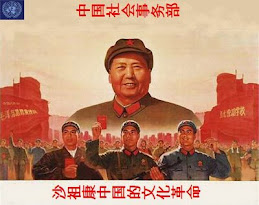
The Culture Revolution is coming to DESA - but will Sha Zukang manage to route out the corruption inside our house?

Today at 10:00 at UN Library our USG will talk to us about his latest report and how he and his ASGs plan to address the increasing fraustration of DESA's staff as well as the rapidly growing corruption and miss-management inside our Department.

The report has been slow in coming. Dated April 30th,it has just been released. What it describes, however, is a serious state of mismanagement and maladministration in our Department which was set up and tasked to assist the deliberations of one of the principal organs of the United Nations: the Economic and Social Council. Among the vast array of issues that may come within its purview are socio-economic development, sound governance and human rights.

Some sixty years ago, a special UN programme to help developing countries improve their systems of governance and public administration was established in our Department, making it one of the oldest in the Organization. Though it is still in existence and DPADM, one of the key Divisions of our Department, continues to administer it, it's but a pale reflection of its former self. Worse still, so-called Division of Public Administration and Development Management has become one of the main exemplars of maladministration, which the report describes in detail. The profile of the Division and of its Chief are writ large in the report.

Already in the Executive Summary, the reader of the report gets a inkling of the intensity and the depth of the dissatisfaction of the bulk of the staff with this sorry state of affairs inside UN-DESA. In para.6 ,for instance, the Task Force Members Representing the Staff explicitely refer to the:

"General lack of trust, intimidation and distrust in the Organization's systems {which} appear to affect the work environment in a number of offices and affect their performance in a meaningful way."

The rest of the report reads like a tale of woes, in which most frequently mentioned are:

1. absence of consultation,

2. lack of accountability, openness and transparency in the management of the staff;

3. lack of concern for their needs;

4. " lack of strategic management " and wastage of " resources and institutional memory ", particularly apparent in the "frequent use of consultants and retirees to fill temporary vacancies" (p.6) often for months or years (p.16);

5. "vacancies{that} are timed and tailored to fit specific candidates or delayed and consultants hired as temporary replacements "; and

6. " ....these backdoor recruits " eventually acquiring " permanent posts often at a higher level" (p.15).

Further down in the report, the issues raised by the staff include "sub-standard ...practices and abuse of power by managers". Noting the "perception of abuse and impunity is widespread " (p.19), the report explains that " Managers are perceived as being allowed to take decisions based on their own and...short-term interests versus the broader long-term interests of the organization". Indeed, they are perceived " as having been allowed to treat some staff unfairly to the point of professional harassment and discrimination... based on personal likes and dislikes"(p.20).

Elsewhere, in the same vein, the staff express the view that the Performance Appraisal System (PAS) ...is currently conducted in a way that is either irrelevant or used by managers to punish/sanction staff members they don't like rather than being used to provide guidance and incentives for staff performance" (p25).

Mostly a passive onlooker, the DESA Executive Office(EO)appears to have done little to arrest this rapid decline let alone to try to remedy this situation. The members of the Task Force expressed "appreciation to the Under-Secretary-General for the opportunity to conduct this exercise" (p.2 para 7).

In contrast to his predecessor , Sha Zukang did not look the other way. Nor did he choose to ignore the accumulated evidence of gross abuse and wrongdoing.

None of these issues are new. Repeated investigations since 2003-4 revealed consistent patterns of maladministration. However, their findings were hushed by an organization apparently only concerned to salvage a waning reputation for integrity. Had DESA acted promptly, it could have stopped the rot and punished the wrongdoers. It did nothing of the sort but allowed the abuse to continue and to intensify.

The attempted cover-up was stopped when, in January 2007, the New York Sun, Fox-News, Washington Times and Wall Street Journal reported on scandals and abuses by DESA involving the misuse of monies of a trust fund. Now the "cat was out of the bag"; a damning report by the auditors of the OIOS was publicly debated in the GA, this last October 10th and yet, in spite of it all, DESA and DPADM -- now ironically nicknamed " good governance division" ( The Washington Times June 12, 2008)-- went on about their business as if nothing was the matter.

One hopes that this latest report, which seems to have the backing of the current USG (Sha Zukang) may shake up DESA and put an end to a pattern and culture of impunity, which have lasted too long.

For more than three years now, both the Department of Management have been repeatedly warned of the deepening malaise in DESA and DPADM; to little effect ,however.Staff members of the Department will tell you how the Division used "a big shredder" to eliminate the evidence before the investigation--initially the auditors of the OIOS; then the Procurement Task Force --could lay their hands on it.

Meanwhile, DESA and DPADM went on about their business of preaching to the world ,what they failed to practise at home. In spite of mounting evidence of maladministration , which the latest report of Human Resources Task Force has brought to light , DESA/DPADM were going around the world sponsoring workshops and seminars on public service professionalism, transparency and accountability. Junkets on public trust were organized (June 2007) and numerous consultants were hired at great expense to help dispell the impressions which clouded the reputation of DESA/DPADM.

All the above went on under the "watchful eye" of Guido Bertucci himself and a former "Ethics Officer", who quit the Department of Management,only to be rewarded for services to Bertucci,with a post and a promotion in his immediate entourage.

Bertucci's gang still proclaim their innocence and say that they've been cleared. But is this what the reports of the OIOS and the Procurement Task Force (PTF) have put in black and white? Leaked to The Washington Times, the PTF report rather maintains the opposite, calling in fact for sanctions against the Director of DPADM and members of his entourage.

But where is the report? Though a year and half in preparation, it is apparently blocked in the office of the culprit, which it is trying to expose. Is this the UN way of promoting integrity and ethics?

Anyhow let's all wait for out 10:00 am meeting and see if this is going to be a real Culture Revolution or only an old-country music event....!!!

Tuesday, 15 July 2008

U.N. 'Good Governance' Official May Escape Penalties for Alleged 'Gross Negligence'

Tuesday , July 15, 2008
By Joseph Abrams

A top "good governance" official at the United Nations accused of dishonest practices may escape penalties despite a scathing internal report that faulted his "gross negligence" and mishandling of a $2.8 million trust fund donated by the Greek government.

Guido Bertucci, director of the United Nations' Division of Public Administration and Development Management, was supposed use the funds to promote transparency and good government in the former Soviet republics.

But a confidential report prepared by a U.N. anti-corruption task force paints a very different picture, accusing Bertucci’s office of nepotism, favoritism, falsifying documents and obstructing a U.N. inquiry — just the sort of practices his office was meant to help root out.

The Greek government is seeking around half a million dollars in restitution for the money remaining in the fund, estimated between $200,000 and $390,000, and for at least $182,000 in operating costs that it says Bertucci’s office wrongly spent.

The United Nations' own report, issued by its Office of Internal Oversight Services following an 18-month investigation, recommended that the Department of Economic and Social Affairs, or DESA, which controls Bertucci’s office, repay $34,000 in wrongly awarded contracts.

The OIOS further suggested that Bertucci, himself, might be held "personally accountable and financially liable" for any misspent funds.

But the 60-year-old Bertucci is unlikely to face those recommended penalties as the clock ticks down to his retirement by the end of July.

The report lies in limbo in the hands of Sha Zukang, the undersecretary-general for DESA and Bertucci’s boss.

"That is where it now sits," said Inga-Britt Ahlenius, undersecretary-general in charge of OIOS, in an e-mail to FOXNews.com. So long as Sha does not rule on the findings of the OIOS, investigation of the report may go unconsidered until Bertucci’s retirement.

The United Nations does not customarily pursue actions against employees who have left its service. With a little stalling, neither the requests of the Greek government nor the recommendations of the United Nations' own investigators will likely be considered.
Calls and e-mails to Sha and DESA were not returned, and questions about the status of the report and of the findings against Bertucci were not answered.

Bertucci, however, was defiant and defended his service.

"I will not resign," he told FOX News. "I’ve not resigned for these 18 months [of investigation] because I’ve done nothing wrong. ... "All the serious charges were cleared," he added. "There was no fraud, diversions, no misappropriation — nothing."

Click here to see a FOX News interview with Bertucci.

U.N. investigators disagreed, outlining a series of violations they say Bertucci and his colleagues committed, and called on his office to make restitution to the Greek government.
It’s a payment that Greece has been seeking since 2006 and has demanded repeatedly since the founding in 1999 of the U.N. Thessaloniki Center for Public Service Professionalism in Thessaloniki, Greece.

The now-defunct UNTC was funded by Greece and administered by Bertucci's department. Its role was to promote good government in Eastern and Central Europe — a goal that none of the interested parties say was met.

The U.N. report found that Bertucci hired consultants without judging their qualifications or confirming that they performed the work they were paid to do and often failed to inform the Greek staff of the UNTC that he had hired the contractors.

One consultant, Derry Ormond, was given a "fictitious consultancy contract" for $5,025 out of the UNTC trust for unrelated work he did for DESA months before, according to the report. Bertucci and a colleague also paid Ormond $5,000 for travel expenses, "despite the fact that the travel never actually took place," the report alleged.

Another consultant, Dimce Nikolov, was given contracts for $17,587 for work entirely unrelated to the UNTC because of Nikolov’s "need to pay for his daughter’s education," U.N. investigators found.

Favoritism wasn’t the only factor determining hiring practices, investigators charged; there was alleged nepotism, too. The report claims, for example, that one consultant, Kashif Abbas, secured contracts for $13,025 at the recommendation and request of his uncle, a senior adviser for DESA.

According to the report, Abbas was recruited because of his relationship with his uncle, who told OIOS investigators "that he was not related to Mr. Abbas," though he returned to the investigators' office hours later to tell them that he was, indeed, Abbas’ uncle.
Abbas’ work was certified and he was paid even though officials never checked for "what, if any, work had been performed by Mr. Abbas under his contract," the report found.

Bertucci told FOX News he didn't know why he would be held culpable for restitutions, maintaining that he did no wrong and was the victim of a witch hunt led by the government of Greece.

"I think this is a witch hunt, a political investigation dictated by political reasons," he said. "I really believe that in these 18 months [of investigation] I’ve shown that I’m faithful to my job."
But during those months, U.N. officials said he "consistently failed to provide meaningful cooperation with the task force investigation," repeatedly delaying the issuing of their findings.
Considering the findings, Bertucci told FOX News that if any funds were misallocated it was "because of the incompetence, the sheer incompetence of the local staff" — the Greek employees of the UNTC.

He specifically named Panos Liverakos, chief technical adviser of the center from 2004 until 2005 and whom Bertucci said he fired for being "incompetent."
Liverakos, in an interview, rejected that idea and said Bertucci fired him because he "blew the whistle on him" — that is, called the alleged mismanagement of the UNTC trust and offices to the attention of the United Nations.

He accused Bertucci of using the trust money "to do favors and exchanges with people around him," and he called the trust a "slush fund" for Bertucci.

Despite the findings of the report and accusations by Liverakos, Bertucci said he had not misspent any money.

"Not one cent of the Thessaloniki Center was wasted," he said. "It was not pocketed by me — not one cent." To back up the claim, Bertucci told FOX News he would "refute [the charges] word by word, with documents — not with innuendos or allegations."

Bertucci has yet to provide any documents, but as the end of July fast approaches and as he edges ever closer to retirement, he may soon have no need to defend himself to anyone.

DESA's STAFF SPEAK-UP: - CONTRACTUAL ISSUES & CONSULTANTS

A. Contractual issues and treatment of short-term and temporary staff (Summary of the issue raised by DESA Staff)

• Several staff cited short-term contracts, particularly those of 1-3 months, stating that our colleagues on temporary positions have contracts and conditions of service that are extremely stressful and do not speak well of DESA or the UN.

• Several DESA staff have colleagues who work as consultants or temporary staff, saying that often these short-term staff are viewed as secondary to permanent staff. They are denied health benefits, job security, and vacation. Some colleagues have trouble taking their children to the doctor because they have no leave.

• Short-term staff are often not informed of whether or not their contract will be renewed until the last day of their current arrangement. One staff member wrote: "It is torturous to see my colleagues stressing about whether or not they will have income tomorrow. I don't know anyone who can sustain good morale and work efficiency in these kinds of conditions. Job security, respect, and vacation are critical for keeping a sharp mind and the UN should be completely ashamed of how it treats these critical staff."

• The rules that govern staff contracts are very confusing and Human Resources and administrative staff are not helpful in this regard. It is very hard to get a straight answer from anyone. Different people have a different answer to the same question and the same people have different answers at different times.

DESA's STAFF SPEAK-UP: PERFORMANCE MANAGEMENT

H. Performance Management (Summary of the issue raised by DESA Staff)

• There is a widespread feeling that the current performance evaluation system is not used constructively or effectively to promote performance and career development. In particular, many feel that the Performance Appraisal System (PAS) exercise is currently conducted in a way that is either irrelevant or used by mangers to punish/sanction staff members they don't like rather than being used to provide guidance and incentives for staff performance. PASs are often not completed on time, jeopardizing staff opportunities to apply for other jobs.

• Some staff complained of receiving little direction and feed-back. In the words of one staff member: "I have gotten very little feedback on my work, which makes it very difficult to learn how to improve. I would be so grateful to have more interaction with my superiors here, so that I could learn more. Instead, I feel that I work mostly in a vacuum with little direction going into the work I get and even less feedback coming to me after it is completed".

• The PAS process is often viewed by managers as useless. There is a widespread dislike of the process, as well as delayed or ex post-facto completion. Overall, the PAS is not used for the career development of staff. In some instances, staff stated that the PAS ratings are not given honestly but instead are given arbitrarily, with the same rating "3" for every one, irrespective of performance. In addition, it was reported that, in some instances, the support provided through the PAS feedback was not adequate to provide guidance to managers on resolving disagreements on PAS ratings between staff members and supervisors.

• In one division, concerns were expressed about: the use of generic, instead of individual work plans, lack of discussion in most cases between staff members and supervisors; lack of mid-cycle review, and consequently lack of opportunity for staff to receive feedback on their performance and take the necessary steps to improve it. Concerns were also expressed about staff members being underrated as compared to UN and DESA curves for PAS, competencies and performance not being rewarded, and PAS being used by managers to penalize staff members by working against their promotions. In some cases, staff felt harassed by programme managers during performance management meetings.

DESA's STAFF SPEAK-UP: CONFLICT

F. Conflict (Summary of the issue raised by DESA Staff)

• Managers are expected to anticipate and resolve conflicts by pursuing mutually agreeable solutions.

• Staff have reported that personal conflicts or dislikes between chiefs and directors and/or heads of relevant UN agencies may seriously inhibit their staff's capacity to perform their work in the manner that would be most beneficial. This is again disappointing since - as a staff member puts it -"working at the United Nations, we have a serious responsibility to place the issues which our work addresses first and foremost".

• In the words of a staff member: "Some managers have no idea how to address conflict. I have witnessed the escalation of conflicts that could have been avoided, if staff were only allowed and encouraged to communicate. For some reason people talk about one another here, but never to one another, when there is a problem. Basic negotiation skills all start with open communication".

• Issues that need to be addressed through management and interpersonal skills are perceived as being left to fester until they create a disempowering and depressing work environment for a number of people. Staff working in unhappy environments tend to produce less and to be less effective.

DESA's STAFF SPEAK-UP: - INTEGRITY, ACCOUNTABILITY AND EQUALITY

C. Integrity, accountability and equality/non-discrimination (Summary of the issue raised by DESA Staff)

• Managers are perceived as being allowed to take decisions based on their own and often short-term interests versus the broader long-term interests of the organization.

• As better detailed in the sections covering staff selection, career development and other human resources management issues, many staff report discriminatory practices, or the perception thereof, specifically dealing with recruitment and promotion of staff. In particular, matters related to hiring of short-term staff and consultant services are questioned.

• In relation to the management of human resources in the Department, many of the contributions reiterate the expectation that all staff be treated with due respect, regardless of grade and position. Some staff expressed their desire to see the Department, and the Under-Secretary-General himself, reaffirming full accountability as well as a no tolerance policy for discriminatory treatment, especially with respect to staff selection and career development matters.

• Managers are perceived as having been allowed to treat some staff unfairly to the point of professional harassment and discrimination. Supervisors are perceived as being allowed to discriminate among staff based on personal likes and dislikes. Staff expressed a clear perception of lack of oversight for managers and supervisors; particularly the lack of an impartial and effective entity to turn to in case of perceived discrimination. Staff also expressed lack of faith in the willingness of superiors to address the fundamental problems in the staff-management relations, i.e. lack of motivation and the perception that other staff being favored.

• A significant number of staff members expressed concern regarding the lack of accountability at the senior management level. Some have suggested the introduction of managerial reviews/audits. In particular, management styles of certain division chiefs have been described as "tyrannical" or authoritarian.

• Some staff members asked why the integrity survey was not repeated or followed up on since 2004, give the significance of the results and the resources invested. Others asked why the results of a survey by the USG-DM, as part of a project to review the Secretariat's Accountability Framework (see http ://i seek. un. org/webpgdept1357_28 . asp) were not publicized.

• The senior management is perceived as being particularly non-accountable in terms of human resources management. As a staff member put it "We are happy to see that the SG is encouraging transparency, honesty and integrity but unfortunately we do not see the Directors, Chiefs and Deputy Chiefs in DESA following suit". The Executive Office is perceived as providing options by the rules but not tackling issues of staff wellbeing and fairness.

• The managers' decisions, style and practices do not appear to be overseen and/or questioned. This often leads to a very strong perception of favoritism, especially in relation to the long permanence on temporary positions of external candidates who are not selected with due process, or of retirees who are also kept on board at length. In some of the units concerned, such perceptions are strongly linked to the Directors' role, as Dls and lower grade managers are perceived as executing the Directors' unchallenged decisions including those relating to training options, or career development opportunities. (Note: This issue also appears under "Career Development -- Investing in Staff').

• In a few cases the contributions describe unbalanced and informal power-sharing systems, strongly centralized in a small group of people, often alienating most of the remaining staff members. In such settings, basic transparency concerning how priorities are set and decisions are made appears to be lacking. Favoritism, lack of consultation and delays in filling of vacancies and in designing and sharing work plans are also complained about. Staff contributions on this matter highlight the prominence of allegiance to superiors instead of to the organization itself.

DESA's STAFF SPEAK-UP: MANAGING FOR EFFICIENCY AND EFFECTIVENESS

B. Managing for efficiency and effectiveness (Summary of the issue raised by DESA Staff)

• Managers are expected to accurately judge the amount of time and resources needed to accomplish a task and to match task to skills.

• Accurate and efficient management of resources, including human resources, is the responsibility of all managers. (some staff refer to the disproportionate distribution of workload as a source of dissatisfactions). It is perceived that because supervisors overburden staff members who are seen as performing well and in a timely manner, work is not evenly distributed. Staff feel that no reward is provided to those who perform well. Younger staff members, in particular, voiced a deep feeling of under-utilization, which leads to disempowerment and lack of motivation.

• Various units in the Department reported on sub-standard management practices and abuse of power by managers. Some of the contributions cited the devolution of power to managers and Directors which took place some years ago as having created major mismanagement as it was not accompanied by an adequate system of checks and balances.

• The related perception of abuse and impunity is widespread. For example, some staff members have alleged that their career prospects have been limited by supervisors or directors who have consistently side-lined them. Others have reported that posts have been moved around to create pre-tailored opportunities for promotion. Some staff members have also reported that training and official travel have not always been authorized in a consistent or transparent manner, but rather as privileges or favors granted to selected staff.

DESA's STAFF SPEAK-UP: -LEADERSHIP

A. Leadership (Summary of the issue raised by DESA Staff)

• Managers are expected to serve as a role model that other people want to follow.

• Staff complain that managers are not leading by example and that deeds do not often follow words in the management of the Department.

• The gap between what it is stated and what is actually carried out lowers staff morale and reduces effective performance. It also has a negative impact on meaningful dialogue between managers and staff, team spirit, sharing of information, transparency, and genuine evaluation of outcomes achieved. As one staff member put it: I strongly believe that the quality of leadership of Sections and Divisions within the Department is a major factor in determining the output of those Sections and Divisions.

DESA's STAFF SPEAK-UP: - TRANSPARENCY IN RECRUITMENT & PROMOTION PROCEDURES

C. Transparency in recruitment/promotion procedures, use of consultants, interns, short-term staff and retirees (Summary of the issue raised by DESA Staff)

• There is a perceived lack of transparency in how temporary posts are allocated. Division Directors have too much discretion in allocating temporary posts without advertisement or interview process, especially given that the incumbent is almost always given the job once it is advertised. Abuses were reported in this area.

• Vacancies are timed and tailored to fit specific candidates or delayed and consultants/retirees hired as temporary replacements. There is no accountability on the actual content of vacancy announcements and, interview panels are generally arranged with a view to ensure pre-decided outcomes (the panel leader usually chooses like-minded people, friends, supervisees, etc.)

• Maintaining large pumbers of temporary staff - particularly at P2 and P3 levels - for many years continually renewing contracts, after a one month break in service, undermines formal recruitment processes and blocks candidates from both the NCE and GtoP. It also circumvents education requirements for professional posts. Eventually these "backdoor" recruits may acquire permanent posts often at a higher level. (See also Career Development -- Investing in Staff.)

• Furthermore, consultants and retirees are frequently hired to perform work that regular staff could easily and willingly perform and which would also assist them to acquire further experience that could improve their skills and assist them to obtain a future promotion. Some consultants hired for short-term projects have stayed on for years, thereby precluding career opportunities for regular staff members and violating the concept of consultant status. (See also Career Development -- Investing in staff)

• Rather than hiring short-term staff to replace staff on mission assignments, staff at lower levels should be given the opportunity to perform higher level tasks, while short-term recruitment should be sought for the lower level functions. This should especially be the case for GS staff being placed against temporary P2 pr P3 posts in order to perform more challenging functions. There is a SMCC agreement (SMCC XXV) which clearly spells out that this should be done in all offices yet it is never implemented.

• The expedient solution to fill posts quickly – by hiring retired or outside personnel for regular work – is regrettably very common. This practice destroys staff morale and creates an artificial barrier to staff growth and advancement. Complying with the rule to advertise expected vacancies well in advance could curb some of the need to hire retired staff

DESA's STAFF SPEAK-UP: - USE OF POSTS

B. Use of posts (Summary of the issue raised by DESA Staff)

• According to inputs received from staff, the re-allocation of posts among branches within DESA Divisions to accommodate individual promotions yields the following negative results:

i) discourages career development and mobility because individuals stay in their current job while receiving a higher level;

ii) lack of fair assessment and evaluation of post level because the higher level post is not properly classified;

iii) depletes resources thereby adversely affecting performance; iv) destroys morale as it is seen as favouritism and abuse of power.

DESA's STAFF SPEAK-UP: - PROMOTION AND RECRUITMENT OF PERSONNEL

A. Promotion and recruitment of personnel (Summary of the issue raised by DESA Staff)

• Several staff members stressed that current rules and practices discourage promotion based on merit and favors a more bureaucratic approach based on seniority and the fulfillment of mobility requirements. Such rules and practices also encourage short-term solutions (e.g. hiring of consultants) and are prone to abuse by managers (e.g. hiring persons they favor).

• It was pointed out that in order to strengthen DESA role and capacities it was necessary to encourage staff performance through a proper system of incentives/rewards. The main criteria for staff promotion should remain the quality of contribution and other qualifications such as leadership and management skills. Recruitment of external candidates should be weighed against the need to promote and consolidate performance of internal staff as the backbone of the Organization's workforce.

• In general a strong feeling of lack of trust and frustration concerning how decisions are made on recruitment/promotion emerged from staff comments.

• There is a common perception that individuals selected for posts are not always the best qualified. Staff members believe that qualifications, ability to perform assigned duties, contributions made, education, experience and suitability for the job, should be the most important indicators. However, respondents felt that merit may not always be used as the main selection criteria and promotions. Likewise managerial posts are not based on qualifications such as leadership and management skills. Staff perceive that individuals may instead be recruited/promoted based on their connections and their nationalities.

• The current Central Review Board (CRB) system does not provide sufficient checks and balances, as its role is restrictive and limited. As a result, on the one hand, managerial prerogatives appear to have been granted without formal, systematic oversight. This situation allows managers to abuse their prerogatives and to select and promote staff based on their own perceived and often short-term interest, versus the long-run broader interest of the Organization.

• On the other hand, these prerogatives also create conflict over appointment/promotion choices between different managerial levels. In some Divisions, it was reported that the decentralized recruitment has not been fully implemented and decisions on recruitment are widely imposed by the head of the Department.

• Moreover, a serious limitation of the Galaxy system is its inability to
separate recruitments (based on finding the best qualified person for the job) from promotions (assessing if individuals merit a promotion and new responsibilities). Hence, a great number of the posts advertised are not really open but are destined to promotions. This results in a significant waste of resources and time from administrative offices, substantive offices and applying candidates. It also creates delays in the efficient management of staff and posts and undermines the importance of performance. Thus the promotion process becomes inadequate as panels do not assess the candidates' past performance (whether they have done enough to deserve the promotion) but only compare them against other candidates.

• In addition to the above dysfunctions, the selection process is considered to take too long - often exceeding the 6-month period allowed for filling vacant positions.

• Against this backdrop, the Executive Office (EO) is perceived to favour the approval of consultancies over the creation of extra staff positions and to have a tendency to approve consultancies without requesting an assessment of alternative work redistribution options among existing staff.

DESA's STAFF SPEAK-UP: - TRAINING

C. Training (Summary of the issue raised by DESA Staff)

• Several staff members stressed the need for more qualitative and relevant training. The way training is currently carried out does not meet staff needs for skills upgrading and does not encourage training and research to continue upgrading their skills.

• Training funds for substantive external training are often too low for staff to be able to attend state-of-the-art conferences, university seminars and to have access to libraries to keep abreast of the latest knowledge. Moreover, already scarce training resources and opportunities tend to be allocated unfairly, at the discretion of managers, rather than according to staff needs.

• Some lamented that training was often approached as an afterthought or was left to the individual initiative of staff members and not as part of a Departmental strategy to address the Department's needs.

• Several staff members suggested using training as an opportunity to address issues cutting across divisions and to promote inter-divisional communication and exchange. For example, training workshops could be held for all DESA staff on key areas covered by the Department (e.g. FFD, gender, social and sustainable development, climate change, etc.) as a way to reduce fragmentation and enhance synergies between Divisions. Training in project management skills was also considered very important to improve performance and results.

• Some pointed to the limited technological capacity existing within the Department among staff –e.g. to use Excel, update websites or use the full functionality of Lotus Notes, the internet or even Microsoft. The result was a negative impact on efficiency and communication and a lack of appreciation for the potential of IT to improve work methods (e.g. working remotely) and to provide an important interface with the world (UN website).

• IT skills requirements, especially managing and updating websites, and research assistant requirements were also becoming increasingly more important in various offices across the organization and certainly within DESA.

DESA's STAFF SPEAK-UP: - CAREER DEVELOPMENT

B. Enhancing opportunities for career development (Summary of the issue raised by DESA Staff)

• Several staff members commented on the lack of sufficient learning and career development opportunities. Many viewed more flexible arrangements for short-, and medium-term assignments as necessary to help mobility and increase career opportunities. Working across divisions and departments, e.g. through task forces or on short- and medium-term assignments with other divisions, departments, regional commissions, and UN specialized agencies, was viewed by many as a way to improve staff exposure to other divisions/offices, increase knowledge and skills, stimulate creativity and dynamism, and create career opportunities for the long run.

• Assignment with the regional commissions, in particular, was seen as helping create a better understanding and stronger working relations between DESA and the commissions, whose work is closely related.

• A number of staff members pointed to the lack of strategic management of human resources that took into account the need to prepare junior staff to take on responsibilities at the senior level when required and the need to provide career prospects to all staff members, regardless of their grades. The use of consultants and retired staff also needed to be viewed in this context. It was noted that the frequent use of consultants and retirees to fill temporary vacancies – including for the writing of SG reports – had limited opportunities for junior staff to grow on the job by absorbing responsibilities at a more senior level, and perpetrated a capacity gap into the future. It also wastes financial resources and institutional memory. Overall, managers need to take better advantage of existing skills and provide incentives for staff to engage in their field of work.

• A number of issues were raised regarding performance evaluation relating to career development. These are included in the Section on Performance Management.

DESA's STAFF SPEAK-UP: - MOBILITY

A. Mobility (Summary of the issues raised by DESA Staff)

• Several comments were made regarding the mobility requirement. Staff members were critical of the rules and procedures guiding the mobility exercise. They pointed out shortcomings and problems related to its implementation and suggested a number of recommendations to improve the exercise.

• There was a feeling among staff that the mobility exercise is not taken seriously. Most managers have avoided implementation by reassigning staff before the mobility deadline. As a consequence, some staff members, who did not face mobility, have been "requested" to swap posts with colleagues and felt obliged to do so even though it might not have been an optimal career move for them. Another way of avoiding mobility was to promote general service staff without changing their functions and/or reporting lines in reality.

• Several staff members also felt that rules of mobility were not clear and many of their related questions remained unanswered.

• Career planning becomes challenging in light of the mobility requirement. A staff member felt that it was hard to carry out his/her current annual work plan not knowing where he/she would be by the end of the year. There was also a perception that mobility requirements limit transfer of knowledge between senior and junior staff members in similar positions.

• Many Chiefs/Supervisors do not universally support mobility through lateral or SPA moves. They feel entitled to either favor or block these kinds of moves of staff in their units. The perception is that doing good work gets rewarded with lack of opportunities for career development as it is in managers' interest to keep these staff where they are, and those who perform poorly are often "helped" to leave through mobility or even promotion. There were some cases in which staff members wanting to move were stopped by their managers and had to turn to the Executive Office for help. In other cases they had to perform both jobs in order to be allowed to move while keeping a good relationship with supervisors.

• Managed reassignment and mobility requirements lead to lack of investment in staff by their bosses, including investment for skills development through the offering of challenging assignments, allocating training funds and travel opportunities.

• Staff are discouraged from pursuing mobility options on their own. One of the reasons is that selection rules discourage "shopping around". A case in point is a rule, according to which after an interview, a candidate, if selected, cannot turn down the job unless offered another position. Another reason is that OHRM would not approve a job swapping arrangement agreed to by all involved, if it is outside the managed reassignment exercise.