Friday, 18 March 2011

General Staff - PETITION - to Secretary General Ban Ki-moon

PETITION

FREQUENCY OF PAYMENT OF SALARIES
FOR STAFF SERVING AT U.N. HEADQUARTERS

Therefore, we, the staff of the United Nations serving in New York, hereby submit' a petition to you, .

a) to consider the hardships many of us would face should action be taken to pay staff . in the General Service and related categories their salaries only once a month;

b) to follow local standards and laws, in particular New York State Labor Law section 191, on frequency of payments of salaries to employees; and

c) to pay the salaries of all General Service and related categories of staff working for the United Nations in New York not less than semi-monthly. .

Please accept, Sir, the assurances of our highest regard for your leadership.


Wednesday, 16 March 2011

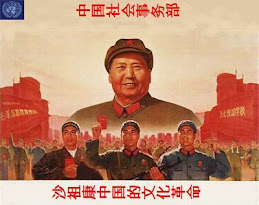
UN-SG Ban’s Indian son in law Siddharth Chatterjee falls victim to three precent budget cut & UN law is actually what communists in Beijing say it is.

BY MARTIN NESIRKY, SPOKESPERSON FOR SECRETARY-GENERAL BAN KI-MOON

TUESDAY, 15 MARCH 2011

... UNOPS OFFICIAL IS ON SPECIAL LEAVE WITHOUT PAY: In response to questions, the Spokesperson said that Siddharth Chatterjee left his position as UNOPS (United Nations Office for Project Services) Regional Director for Europe and the Middle East in July 2010 and, after taking accumulated annual leave, went on special leave without pay until May 31, 2011. The end of the special leave without pay coincides with the end of his period of secondment to UNOPS from UNICEF. During his special leave without pay, Mr. Chatterjee does not receive any payments or funding from UNOPS...

www.un.org/News/ossg/hilites.htm

"A.R.T.H.U.R." the spy among us (@UN/IAEA)

Top UN Arms Verification Official Named As Russian Spy

From Congressional Quarterly Jan 19

The top U.N. official responsible for monitoring the clandestine nuclear programs of Iranand Pakistan is a Russian spy, according to a new book on Moscow’s espionage operations in the United States and Canada.


The official is identified only by his Russian code name, ARTHUR, but other sources identified him as Tariq Rauf, 54, a Pakistani-born Canadian who is chief of verification and security-policy coordination at the International Atomic Energy Agency (IAEA).


http://newzeal.blogspot.com/2008/01/top-un-arms-verification-official-named.html

Timothy Hampton

Timothy Hampton (1962–2009) was a specialist in weapons of mass destruction and an employee of the Comprehensive Nuclear-Test-Ban Treaty Organization (CTBTO) inVienna, Austria since 1998.

Death

Hampton died in an apparent fall from the 17th floor of his workplace, Building E, at theVienna International Centre in Vienna, Austria. According to a UN spokesman, he was found dead at the bottom of an internal stairwell at around 8.00 am on Tuesday, October 20, 2009.[1] Hampton was trained as a bio-chemist and had worked with David Kelly, the director of microbiology at Porton Down, Britain's Defence Science and Technology Laboratory, before moving onto nuclear test-ban projects. Hampton is survived by his partner, Olena Gryshcuk and a 3 year old child. Gryshcuk is reported to be a weapons inspector for the International Atomic Energy Agency (IAEA).[2]

Controversies...

http://en.wikipedia.org/wiki/Timothy_Hampton

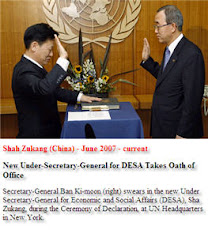
Is this the type of IT and Good Governance best-practices Sha Zukang and Haiyan Qian have in mind to develop thru UN-DESA?

CLICK HERE TO VIEW THIS ON ENGADGET.COM


If you've been struggling to get your dose of Facebook or Twitter in China recently, then you're probably one of the many Internet users who've had their VPN access -- either free or paid for -- blocked over the last two weeks or so. That's right, the notorious Great Firewall of China is still alive and well, and leaving proxy servers aside, VPN is pretty much the only way for keen netizens to access websites that are deemed too sensitive for their eyes; or to "leap over the wall," as they say. Alas, the recent pro-democracy protests didn't exactly do these guys any favor -- for one, their organizers used Twitter along with an overseas human rights website to gather protesters, and with the National People's Congress meetings that were about to take place (and wrapped up last night), it was no surprise that the government went tough on this little bypassing trick. To make matters worse, PC World is reporting that Gmail users are also affected by slow or limited access, despite the service previously being free from China's blacklist.

We reached out to a handful of major VPN service providers, and they all confirmed a significant increase in the amount of blockage -- possibly by having their servers' PPTP IP addresses blocked -- over the last two weeks. One company even spotted the Chinese government subscribing to its paid service, only to work its way into the network to locate the company's PPTP server list, and then put them behind the firewall. Fortunately for some, the better-off companies had backup servers to rapidly resolve the problem, whereas the cheaper and free services were unable to dodge the bullet. This just goes to show that sometimes you get what you pay for. That said, with practically unlimited human hacking power at its disposal, it doesn't take much for the firewall to shut down everything heading its way. For the sake of our friends and expats there, let's just hope that the government will take things down a notch as soon as the storm calms.

Tuesday, 15 March 2011

Who is the other woman of Siddarth Chatterjee (Ban Ki Moon's Son in Law)?

CLICK HERE TO READ MORE @INNERCITYPRESS.COM

At UN on Sri Lanka, Ban Son in Law Called "Irrelevant," Rajapaksa Relations Still Undisclosed after Tete a Tete Meeting

By Matthew Russell Lee


UN's Ban depicted in Sri Lanka camp, son in law not shown

Ban's office has previous sought to cut off questioning about Ban's son in law, including his rapid rise through the UN system. In 2009, Inner City Press asked Nesirky's Office in writing to “please state from where the S-G's son in law Mr. Chatterjee got his degree(s), and the status of his case(s) with Ms. Shipra Sen.”

Ms. Shipra Sen had contacted Inner City Press, saying she could not otherwise get justice. She was married to Siddarth Chatterjee before he became involved with Mr. Ban's daughter Ban Hyu-yee. Ms. Sen states that Chatterjee used his connections to quash her in court, and that she had more recently contacted her to threaten her against speaking to Inner City Press.

Ms. Sen has described to Inner City Press Mr. Chatterjee's time with the Indian military whose time in Sri Lanka included charges of abuse and even war crimes, including graphic descriptions which make questions about Sri Lanka and Ban's son in law far from irrelevant.

It would seem important for Ban or his Office to comment. But on September 29, Nesirky also refused to answer the outstanding question about Ban's relations with Rajapaksa. The questions continue to mount. Watch this site.

Ban's Son in Law Disappears from UNOPS as “Furniture, Parked in New Jersey"

By Matthew Russell Lee

UNITED NATIONS, March 14 -- From the time Ban Ki-moon began as UN Secretary General, the Press has raised questions about promotions given to his son in law Siddharth Chatterjee, who jumped to being the chief of staff to Staffan de Mistura in Iraq, then made Middle East chief at the UN Office of Project Services in Copenhagen.

The UN at first tried to argue that these were not in fact promotions, and then openly refused to answer questions on the topic from Inner City Press.

Now, sources at UNOPS in Copenhagen and elsewhere say Chatterjee is leaving his UNOPS position, where he was described as “the furniture” for lack of aptitude.

When Human Resources, run for UNOPS by the UN Development Program, asked for basic information from Chatterjee for example about this educational credentials, the information was never given.

Sources long close to Chatterjee say that the military degree in India has has listened is not what it appears to be, and that an earlier marriage in that country was ended and largely erased from the record by extraordinary means. “It's not clear how much the Bans know about it,” says one source, adding that missive have been sent to Mr. Ban himself.

Now, according to the UNOPS sources, as Ban seeks a second terms as Secretary General, Chatterjee has been “parked” out of the way in southern New Jersey, getting basic math education paid for by the UN system. “They're trying to keep him out of sight, after his exposure as 'The Furniture' at UNOPS,” says the source.


Ban and spokesman Nesirky, son in law not shown, questions not answered

It would be nice to have and include Team Ban's response, but his spokesman Martin Nesirky, like Michele Montas before him, openly refused to answer questions about Ban's son in law Chatterjee.

Sunday, 13 March 2011

At UN, As Ban Ki-moon Promotes Indian Ambassador's Wife, Are Rules Needed on Lobbying for 2d Term?

By Matthew Russell Lee @InnercityPress.com

UNITED NATIONS, March 13 -- A UN Secretary General asks for the support of UN member states, not only to endorse his programs but also, as is the case these days with Ban Ki-moon, to vote for a second term. Should there be rules governing how he goes about lobbying for this support?

On March 11, Ban's deputy spokesman Farhan Haq announced that Ban has appointed Lakshmi Puri as an Assistant Secretary General in the new UN Women entity.

Haq dismissed the question of if Ms. Puri is the wife of Hardeep Singh Puri, the Permanent Representative of India, currently a member of the Security Council which must vote on Ban getting, or not getting, a second term as Secretary General.

Haq said, "I am not aware of the family relationships of the people I just named. I only just got this list."

On March 12, Inner City Press wrote directly to Ambassador Hardeep Singh Puri to ask for confirmation, and ask for a “response to those that say it might have or appear to have any impact on how the Secretary General is viewed or treated, especially but not only as he goes for a second term.”

On March 13, Hardeep Puri called Inner City Press and presented his side. He said that he and Lakshmi have been married for some 35 years, adding that “my being here and her being there has not made any difference in terms of one influencing the other... She was in Geneva with UNCTAD... Then here in New York as director of High Representative on Least Developed Countries, since October or November of 2009. She applies for jobs as do several others in the UN system.”

Inner City Press asked Hardeep Puri if he thought that any rules should apply to the Secretary General giving jobs to spouses of the Permanent Representative who will vote on his second term.

Hardeep Puri to his credit acknowledged that if a person “completely from the outside, without the qualification, were offered the job... in this kind of situation, obviously eyebrows would be raised.”

Rightly or wrongly, in this case some eyebrows have been raised. One analogy is to a public corporation, in which it would be problematic for a chief executive to give a job to the spouse of a board member who is supposed to oversee his performance and continued employment.

Hardeep Puri issued a challenge, telling Inner City Press to watch “if you suddenly find Hardeep Puri restrained.” We will.


Hardeep & Lakshmi Puri, center, S-G rules not shown

The question remains, should the UN enact rules to govern this situation which is fraught with the possibility of conflict of interest?

Footnote: after this response, Hardeep Puri called back to make two final arguments, first that it was Michele Bachelet that interviewed Lakshmi Puri, and not Mr. Ban himself. In fact, this was pointed out in spokesman Farhan Haq's announcement, perhaps acknowledging that if Ban himself did the interviews and was entirely responsible, there would be an issue. But Ban is the decision maker here, and the issue remains.

Second, Hardeep Puri argued that a country's position would not be influenced by such a hire. But it is widely reported that France conditioned its support of Kofi Annan second term as Secretary General on being given the Under Secretary General for Peacekeeping post. So the danger of conflict of interest and improper lobby remains. There should be rules.

Saturday, 12 March 2011

Ban Ki Moon appoints the wife of Indian Ambassador to the U.N. as Assistant Secretary-General for UN Women


Ms Lakshmi Puri

Ban Ki Moon, "on the recommendation of Michelle Bachelet", appointed Lakshmi Puri of India to the position of Assistant Secretary-general of UN Women.

While many diplomats at the UN are calling this appointment as a move from Ban Ki Moon to secure and solidify India's and its Ambassador (H.E. Hardeep Singh Puri) support for a second term, some of them questioned the qualifications and timing of appointment.

To be fair, Ms. Lakshmi Puri has had a long career with UNCTAD (7 yrs - Dir Trade in Goods and Services) and UN HQs - OHRLLS (3 yrs - Dir High Rep Least Dev Countries) on her own, as well as a distinguished career with India's Foreign Service.

Friday, 11 March 2011

LIVE NOW: turn on Channel 4 of UNTV to follow UN Appeals Tribunal decision on a prominent UNDESA case


FOLLOW UP: UNAT sends back to UNDT Bertucci's case.

UNAT saves Ban Ki Moon's ass, while slapping him for "irregular process for hiring Thomas Stelzer of Austria"

FOLLOW UP:
  • Guido Bertucci get's a moral victory, but no compensation.
  • UNAT saves Ban Ki Moon's ass with a "small technicality".
  • Otherwise Ban's second term would have been in total jeopardy if UNAT would have confirmed a victory for Bertucci.
  • UNAT's decision to revert back to UNDT postpones Bertucci's victory for another 6-9 months, enough to ensure a "smooth" confirmation for Ban's second term on the job.
  • As one staffer from Ban's Legal office (OLA) said: "this is the best we could have hoped from UNAT at this time";

Wednesday, 9 March 2011

A Second Chance for Ban Ki-moon

CLICK HERE FOR ARTICLE ON IP

A strategy to maintain UN relevance in a shifting geopolitical climate

9 MARCH 2011
by Richard Gowan, in:

Although Ban Ki-moon faces no challengers in his bid for a second term, he will have to demonstrate an improved instinct for running the United Nations. Without better leadership, the UN runs the risk of becoming irrelevant, as Western governments’ austerity cuts constrict an already tight budget and rising powers seek to limit UN interference.

Something strange is happening at the United Nations. Ban Ki-moon, who has received lackluster reviews since he became Secretary-General in 2007, wants a second five-year term. Although widely criticized as an insipid leader and feeble manager, Ban faces no challengers. Diplomats in New York expect the Security Council to nod through his renewal sometime later this year. If Ban strolls to victory, he may miss one of his last opportunities to lay out a compelling vision of why the UN still matters—something he has consistently failed to do so far.

Ban has achieved a measure of job security by avoiding offending the two powers who will determine his fate, the United States and China. In theory, France, Russia, or the United Kingdom could also veto his renewal, but none of them think it is worth a big diplomatic fuss.

The very lack of debate about Ban’s future is a worrying symptom of the UN’s gradual loss of international prestige. As the Secretary-General admits, the organization has been overshadowed by the G-20 during the financial crisis. Disputes between the United States, China, and Russia have paralyzed the Security Council in emergencies from Georgia to Zimbabwe. Rising powers such as Brazil and India are investing large sums in development aid, but typically act bilaterally rather than through UN agencies.

Nonetheless, the UN remains extraordinarily active, with peacekeeping and humanitarian operations at record highs. But this is not guaranteed to last. European powers that pay for much of the UN’s work are looking to make budget cuts in the name of austerity. While the Obama administration has frequently underlined its support for the UN, the newly-empowered Republicans in Congress have threatened to hold up funding. This might explain why there is no one else vying to be Secretary-General this time around.

Ban has oscillated between bouts of fatalism about the UN’s decline and curious bursts of overheated rhetoric about its importance. An opinion piece published under his name in New Europe, The Star, and other papers in December captures his ambivalence. “The world looks to the UN more than ever before,” he writes, citing challenges from poverty alleviation to nuclear disarmament, “yet the conventional wisdom is that we are not up to the job.”

Unsurprisingly, Ban disagrees with this conventional wisdom. The opinion piece culminates with a protracted appeal for a UN that “delivers peace, development, human rights, and global public goods—in a word, hope—to people around the world every day.”

Like most senior politicians, Ban presumably does not write his own opinion pieces, so he cannot be blamed for this faux-Obama-esque prose. But he should at least sign off on texts that go out in his name—and believe in them. It is worrying to think that the Secretary-General might imagine that the challenges facing the UN can be solved by an appeal to “hope.” Although the UN embodies an ideal of universal political cooperation, it is ultimately a massive global service-provider—with an array of products ranging from peacekeeping forces to climate change conferences—and is judged on deeds, not words.

Ban’s predecessor-but-one, Boutros Boutros-Ghali, produced a highly sophisticated blue-print for the UN’s role in a post-Cold War world—1992’s Agenda for Peace. But if he is remembered today, it is because the Rwanda and Srebrenica massacres took place on his watch. Ban’s immediate predecessor, Kofi Annan, was a mediocre speaker (he sounded good on radio, but his speech-writers sometimes despaired at his quietness), but he won credibility by imposing much-needed management reforms early in his first term and then by revitalizing UN peacekeeping with new operations from Kosovo to Congo.

Annan was far from a perfect leader. His last years in office were scarred by the Iraq war and management scandals. He was sometimes guilty of overestimating what the UN could do. Some peacekeeping officials have still not forgiven him for advocating a UN deployment to Darfur, despite clear warnings that the mission would struggle in an appalling operational environment—warnings that have proven thoroughly justified. Yet Annan did have an underlying instinct for his organization’s politics, abilities, and limits.

Ban Ki-moon now needs to show that he has developed the same instinct for the UN during his first term in office and that he can apply the lessons he’s learned during the next term.

When Ban started work in New York in 2007, he appeared detached from the institution Annan had bequeathed to him. Thanks in significant part to Annan’s efforts, the UN had over 70,000 troops and policemen in nearly 20 peacekeeping missions at that time (the number has since risen to 100,000). But Ban seemed skeptical about their work’s value, focusing on climate change diplomacy instead. His motives were honorable, but he alienated officials slaving away in far-off trouble-spots, risking an exodus of the organization’s most promising young officials to the private sector.

Ban’s decision to focus on climate diplomacy could have paid off handsomely if the 2009 Copenhagen summit had delivered a legally-binding international deal on climate change. It notoriously did not, and Ban was lost in the maelstrom of diplomatic bickering in Denmark.

He partially redeemed his strategy with a widely-quoted speech on the world’s “insufficient response” to the climate challenge at the successful follow-up conference to Copenhagen in Cancún in December 2010. However, his earlier efforts to define himself as a climate warrior now look like a bad bet: Ban seized on a high-profile policy issue over which he had little leverage, while paying the UN’s crisis managers too little attention.

This has done clear harm. The UN’s operation in Darfur has stumbled from humiliation to humiliation, preyed upon by bandits and repeatedly obstructed by the Sudanese government. In 2008, the UN was blindsided by a predictable crisis in the Democratic Republic of Congo in which rebels displaced over 200,000 civilians in an area patrolled by UN troops and attack helicopters. The UN Assistance Mission in Afghanistan—arguably its single most important operation in American and European eyes—descended into complete confusion after Hamid Karzai allegedly rigged the national elections in 2009.

Even if Ban had devoted his every waking moment to preventing these shocks, they might well still have blown up, but the UN has seemed to lack strategic foresight too often.

Lessons Learned

Yet there is good news. Not only did Ban do a better job on climate in Cancún than Copenhagen, he has even begun to raise his game on crisis management. In early 2010, conscious that a crisis might be looming as South Sudan prepared to vote on secession in January 2011, Ban sent some of his best senior officials to get a grip on the problem. Additionally, when Côte d’Ivoire’s President Laurent Gbagbo tried to nullify his defeat in internationally-recognized election results last December, Ban demanded that he should go. He refused to withdraw peacekeepers defending Gbagbo’s rival Alassane Ouattara. He also spoke out early and firmly against the Mubarak regime’s efforts to crush Egypt’s protest movement—arguably out-performing some Western leaders—and has worked hard to ensure that the UN has a role in resolving the Libyan crisis.

This is all “too little too late,” say some of Ban’s critics inside the UN. Ban had four years to head off the Ivorian crisis, they grumble, but failed to focus on it until things went wrong. Some worry that his strident support for Ouattara have reduced his ability to influence events in Côte d’Ivoire—now on the brink of civil war—while the UN’s actual leverage over events in Egypt and Libya remains limited.

Nonetheless, Ban has finally begun to demonstrate a better understanding of the organization he runs. Last January’s earthquake in Haiti, in which over 100 UN personnel died, may have helped him identify with his staff in the field.

This is a step in the right direction. But Ban has to go further and lay out a credible vision of how the UN can remain a useful service-provider in a changing world order.

To borrow Sarah Palin’s phrase, this cannot be all about the “hopey-changey thing.” Ban is too conservative and too well-known a figure to recast himself as a standard-bearer of hope. Even if this was not the case, the UN Secretariat and its cluster of funds and agencies simply do not have the leverage to set the international agenda—China’s rising investments in Africa dwarf the development funds the UN can offer, for example.

If the UN cannot offer a spectacular vision of a better world, it may still be able to provide a safety net for countries and peoples teetering on the edge of crisis. Even if Ban is wary of Kofi Annan’s legacy, he may recall that his predecessor once said that the UN does not exist to lead the world to heaven, but to save it from hell. Can it achieve that goal now?

There is a continuing need for the UN to invest in crisis prevention and crisis management. The after-shocks of the financial crisis, fluctuating food prices, and shifting demands for scarce raw materials and energy have destabilized many poor countries. Alex Evans, an expert on globalization, argues that major powers now face a choice. They can either enter a zero-sum competition for resources or invest in strengthening the multilateral framework for managing “scarcity challenges” such as spikes in food prices.

The UN has many of the tools required to help manage these challenges. If global food shortages threaten to be a long-term driver of political instability, two UN agencies (the Food and Agriculture Organization and the World Food Programme) will have a lead role in trying to limit the risks involved. If many of the countries most vulnerable to scarcity challenges are poor states in Africa, then it will probably be UN mediators and peacekeepers that are tasked to manage the fallout rather than NATO, EU, or US forces.

If Ban and his team want to make a case for the UN’s continuing relevance, they need to put together a narrative about how the UN can use its existing resources and expertise—if properly combined—to protect the most vulnerable states from new sources of conflict. Ban has made some gestures in this direction before. When food prices rose rapidly in 2008, he quickly put together a task force of all relevant UN agencies to coordinate a response. He has tried to revitalize the UN’s mediation and crisis diplomacy capacities, and new thinking is gradually emerging around the UN system about how to link conflict prevention, development work, and humanitarian aid to respond to future crises.

So, the Secretary-General and his team have some elements of a new agenda to work with—but they urgently need to communicate this agenda better. While the Western countries that fund UN operations are running out of cash, many of the rising powers are unconvinced that the organization is relevant to them. This is particularly true for Asian powers, including China and India, which have always preferred to keep the UN out of their own internal conflicts. It is unfortunate that Ban, the UN’s first Asian Secretary-General since the early 1970s, has not been able to gain political traction in the region.

If Ban wants to have more traction in general in his second term, he has to distill the UN’s new thinking about scarcity and insecurity into three simple, compelling messages.

First, he must convince the leaders of poor countries—who often view the UN as a neo-colonialist outfit, and would very happily get it out of their affairs—that his organization can help them through periods of instability ahead. Second, he must persuade skeptics in the United States and Europe that UN programs and operations remain the best-value tools for tackling new threats. Third, and most difficult, he must make the rising powers believe that the UN can help secure their growing global interests by fostering stability in weak states.

This last task is not impossible. China has seen how ongoing violence in Sudan and the Congo complicates its energy and raw material investments in those countries. It has come to see how UN peacekeepers can mitigate these problems, and even sent some blue helmets of its own. India grudgingly accepted a UN mission to Nepal to monitor a peace agreement with Maoist rebels in 2007. Ban should capitalize on these individual cases to make a general argument about the UN’s stabilizing role in a multipolar environment.

It is not too late for Ban to make this sort of hard-headed argument. Ultimately, the UN Secretary-General will do more to serve the poor and vulnerable if he addresses real political dynamics and new threats rather than offering vague notions of a new hope.

RICHARD GOWAN is associate director at the NYU Center on International Cooperation and a policy fellow at the European Council on Foreign Relations.

Tuesday, 8 March 2011

Reflections on Women, Girls and Armed Conflict


March 8, 2011

Radhika Coomaraswamy

Under-Secretary-General, Special Representative for Children and Armed Conflict

[Potential Asian challenger to Ban]

I spend a lot of time with children these days, but it was the cause of women that pushed me to initially try and lobby the world to stand firm in the fight for the dispossessed and the vulnerable. As UN Special Rapporteur on violence against women for nine years, I traveled the world over to listen to victims and to argue with governments. I have forgotten the faces of the many officials I met, both national and international, but never the faces of the victims. They taught me so much about how to cope with life despite all the suffering. Recently at a UNECSO event, the former Governor General of Canada and a Special Envoy for Haiti said she hates the word "resilience" used in the Haitian context. She said resilience for women and children comes just before death. Talk of resilience makes us complacent in the belief that after a time the victims will recover no matter what we do. I agree with her we cannot afford to be complacent. But I do remember the resilience in the eyes of women survivors. It did not stop me from acting -- it just made me proud to be human.

Armed conflict is a terrible place for women and children. Often they are victims of direct physical violence. Some are killed, but more often they are raped. In the mid 1990s, while visiting an unnamed country, the lawyers in the foreign ministry, armed with law books, asked me to show them where it was written that rape in wartime is a war crime or crime against humanity. The lawyers were right -- the law with regard to rape as a "grave breach" of the Geneva Convention was unclear and ambiguous.

Click here for more:

www.huffingtonpost.com/radhika-coomaraswamy/women-girls-armed-conflict_b_832559.html?view=print

Looking behind the headlines of DFID’s bilateral and multilateral aid reviews

... UNIDO also scores as poor, and is to have its core funding ended. This seems a real pity, given the importance of manufacturing to the growth prospects of the poorest countries, but also given the new impetus UNIDO has received since Kandeh Yumkella became Director General. He has also led for the whole of the UN on energy, a key ingredient of the poverty reduction package, and a major item on the international agenda, with 2012 having been designated as the International year for Sustainable Energy for All...

www.simonmaxwell.eu/blog/looking-behind-the-headlines-of-dfids-bilateral-and-multilateral-aid-reviews.html

Towards an accountability system in the United Nations Secretariat

Accountability represents the obligation of the Organization and its staff members to be answerable for delivering specific results that have been determined through a clear and transparent assignment of responsibility, subject to the availability of resources and the constraints posed by external factors. Accountability includes achievement of objectives and results in response to mandates, fair and accurate reporting on performance results, stewardship of funds, and all aspects of performance in accordance with regulations, rules and standards, including a clearly defined system of rewards and sanctions.

http://reformdesa.blogspot.com/2010/05/towards-accountability-system-in-united.html

A message from UN Women

By Michelle Bachelet

NEW YORK - A hundred years ago today, women across the world took an historic step on the long road to equality. The first ever International Women's Day was called to draw attention to the unacceptable and often dangerous working conditions that so many women faced worldwide. Although the occasion was celebrated in only a handful of countries, it brought over one million women out onto the streets, demanding not just better conditions at work but also the right to vote, to hold office and to be equal partners with men.

Michelle Bachelet is the first Executive Director of UN Women, a newly formed UN organization dedicated to gender equality and the empowerment of women. She is the former President of Chile.

http://www.vancouversun.com/technology/message+from+Women/4397942/story.html#ixzz1G0J4VBuW

UN Commission on the Status of Women

[Libya is a member as well]

...Membership and composition

Forty-five Member States of the United Nations serve as members of the Commission at any one time. The Commission consists of one representative from each of the 45 Member States elected by the Council on the basis of equitable geographical distribution: thirteen members from Africa; eleven from Asia; nine from Latin America and Caribbean; eight from Western Europe and other States and four from Eastern Europe. Members are elected for a period of four years.

Click here to download the list of current members of the Commission...

www.un.org/womenwatch/daw/csw

The UN’s latest insult to women

On the eve of International Women’s Day, which celebrates its 100th anniversary on March 8, the United Nations has delivered a serious insult to women around the world: On March 4, the UN appointed Iran to its Commission for the Status of Women.

Iran has an abysmal record on women’s rights. Its police can arrest women for getting a suntan, wearing too much makeup, or dressing “immodestly.” One of its religious leaders made headlines around the world last year when he blamed women’s immodesty for causing a series of earthquakes. In 2003, Iranian state thugs raped, tortured and killed Iranian-Canadian photographer Zahra Kazemi because she photographed a Tehran prison.

Even for the UN, which has a long record of exonerating dictatorships even as it obsessively attacks Israel, this display of insensitivity just a few days before an important anniversary represents a new low. The incident helps explain why intelligent people long ago stopped taking ther UN’s pronouncements seriously.

http://fullcomment.nationalpost.com/2011/03/07/national-post-editorial-board-the-uns-latest-insult-to-women

Saturday, 5 March 2011

Son of Equatorial Guinea's dictator plans one of world's most expensive yachts

For over a decade, Global Witness has targeted policy-makers, international organisations, regulators and the banks themselves in an effort to make it harder for corrupt politicians to stash loot in foreign bank accounts. If such checks had been in place and properly enforced, the stolen assets now being seized across the world would not have been in our banks in the first place.

The events unfolding in the Middle East show that we must act now. Unless we tackle corruption on this scale, development will not happen and billions of people will continue to live in poverty. We can persuade the financial sector to clean up its act, but we need your help. Please click here to donate. Thank you.

Note: the image attached to this press release shows Roman Abramovich's Pelorus - understood to have been used as a blueprint for the planned Obiang yacht.

Global Witness has learned that Teodorin Obiang, the notorious son of Equatorial Guinea's long-ruling dictator, commissioned plans to build a superyacht worth $380 million - almost three times more than his energy-rich country spends annually on health and education programs combined [1]. This news comes amid an increasingly heated debate about how Middle Eastern dictators and their family members have enjoyed luxury lifestyles, as well as stashing their assets in foreign countries.

Teodorin (full name Teodoro Nguema Obiang Mangue) asked Germany's Kusch Yachts to draw up a basic design for the secret project, which is codenamed "Zen." Last year, Global Witness revealed details from a U.S. Justice Department investigation into Teodorin which mentioned plans to build a yacht. After discovering that it was to be built at Kusch's shipyard in northern Germany, a Global Witness investigator visited the company and obtained key details about the project, confirming the identity of the client, and the yacht's price tag. The vessel's basic design was completed by Kusch in December 2009 for €250,000 ($342,000) with an original delivery date set for late 2012. However, construction has not yet started.

The Obiang regime has a long track record of looting money that belongs in Equatorial Guinea's treasury. Global Witness has previously revealed Teodorin's profligate lifestyle in the US and elsewhere with a $35 million dollar Malibu mansion, a fleet of luxury cars and a private jet, while earning a ministerial salary of $6,799 per month [2]. It would take him some 4,600 years to pay for Project Zen on his reported official salary.

"Evidence points to corruption by Teodorin on a scale that would not be possible or attractive if countries like Germany and the U.S. were not safe havens, in terms of free passage for him and for his questionable private wealth," said Gavin Hayman, Director of Campaigns at Global Witness. "$380m is a staggering sum - that a President's son from such a poor country has ordered this yacht is outrageous extravagance on his part."

Teodorin's father, Teodoro Obiang Nguema Mbasogo, took power in 1979 following a bloody coup and presides over a repressive government almost entirely dependent on energy revenues generated by ExxonMobil, Marathon and other multinational giants and has one of the worst human rights reputations in the world [3]. Obiang came eighth on a 2006 list by Forbes of the world's richest leaders with a fortune estimated at $600 million, whilst the majority of Equatorial Guinea's people live in poverty [4]. Incredibly, since oil was discovered in the mid-1990s, poverty levels have actually worsened. Equatorial Guinea enjoys a per capita income of about $37,900, one of the highest in the world. Yet 77 percent of the population falls below the poverty line, 35 percent die before the age of 40, and 58 percent lack access to safe water [5].

Forty-one-year old Teodorin is the Minister of Agriculture and Forestry and vice president of the ruling party, and is apparently being groomed to succeed his father. A US embassy cable from March 2009 posted by Wikileaks describes how Teodorin was given a significant tract of pristine jungle to log, leaving him with a "large windfall". The author of the cable paints a picture of a nepotistic state where choice natural resource concessions are handed out to the President's family and close associates. Responding to corruption allegations, Teodorin told the US official: "I've been very lucky in business [.] and I like to live well" [6].
According to the Justice Department investigation Teodorin funneled roughly $75 million into the United States between 2005 and 2007 through three European banks -- Banque de France, Natixis and Fortis -- and then on to the U.S. through Wachovia (later bought by Wells Fargo), Union Bank of California, and Bank of America [7]. Global Witness questioned what checks these banks had done on Teodorin's funds; they could not comment on this.

"[I]t is suspected that a large portion of Teodoro Nguema OBIANG's assets have originated from extortion, theft of public funds, or other corrupt conduct," says a Justice Department document dated 4 September 2007. The document relates to a preliminary investigation; as yet no charges have been filed [8].

Kusch employees who spoke with Global Witness' investigator said that Teodorin's yacht will be 118.5 meters (387 feet), housing a cinema, restaurant, bar, swimming pool and a $1.3 million security system complete with floor motion sensors, photoelectric barriers and fingerprint door openers. Teodorin reportedly met a representative of Kusch at a hotel in Switzerland to discuss the design.

Its total contract price is approximately 288 million Euros, or $380 million at current exchange rates. This would make it the world's second most expensive yacht, behind Russian oligarch Roman Abramovich's $1.2billion Eclipse [9]. England's Tim Heywood, one of the world's most renowned yacht designers, produced the drawings for Project Zen. Heywood's previous designs include the 377-foot Pelorus, which served as the blueprint for Project Zen and is also owned by Abramovich.

Roman Abramovich's Pelorus, understood to be the blueprint for the planned Obiang yacht (image owner: Roqqy, Wikimedia)

"Kusch's motto is, 'we don't just build yachts that you use, we create a dream that you live'. But this sounds more like a nightmare for Equatorial Guinea's oppressed and brutalized citizens, whose money may once again be put to Teodorin's benefit rather than theirs," said Hayman. "The yacht company involved should refuse his cash and repudiate any involvement in the project. In addition, this order should raise loud alarm bells for whichever bank handles this transaction."
Kusch confirmed to Global Witness that Teodorin was a client, but would not give further details "for reasons of confidentiality". Tim Heywood declined to comment.
The Information and Press Bureau of the Government of Equatorial Guinea confirmed that Teodorin had ordered the design, while adding that he "then dismissed the idea of buying it". The spokesperson claimed that if the order had gone ahead Teodorin "would have bought it with income from his private business activities and he would not in any case have bought it with funds derived from sources of illegal financing or corruption". She clarified that in Equatorial Guinea "there are no legal restrictions prohibiting public figures from taking part in private lucrative activities" [10].

Some countries, such as the U.K., require luxury goods dealers including yacht builders to abide by anti-money laundering rules. Like banks, they have to monitor their customers for suspicious activity and report doubts about dirty money to the authorities. Global Witness is calling on Germany to implement similar regulations. In addition, Germany should work with EU member countries to produce mandatory revenue payment disclosure laws for extractive companies, such as those required by the Dodd-Frank Wall Street Finance Reform Act. The Extractive Industries Transparency Initiative (EITI) conference hosted by President Sarkozy in Paris next week would be a good place to start this process.
/Ends

Contact: Robert Palmer on +44 (0)20 7492 5860, +44 (0)7545 645 406, rpalmer@globalwitness.org; or Oliver Courtney on +44 (0)7815 731 889,ocourtney@globalwitness.org.

Notes:
[1] Details on the misappropriation of state money by Teodorin can be found in Global Witness, Undue Diligence: How banks do business with corrupt regimes, March 2009 and Global Witness, The Secret Life of a Shopaholic, November 2009. Budget figures: IMF, Republic of Equatorial Guinea: 2008 Article IV Consultation-Staff Report, March 2009, p. 17.
[2] Statement by the Information and Press Bureau of Equatorial Guinea Director, 17 February 2011.
[3] The US State Department's most recent Equatorial Guinea human rights assessment was damning, describing unlawful killings, torture of prisoners, official impunity, arbitrary arrest and restrictions on free speech: U.S. State Department, '2009 Country Reports on Human Rights Practices: Equatorial Guinea', 11 March 2010. For more on the oil industry see the website of the Ministry of Mines, Industry and Energy, as well as Human Rights Watch, Well Oiled: Oil and Human Rights in Equatorial Guinea, July 2009.
[4] Luisa Kroll, 'Fortunes Of Kings, Queens And Dictators,' Forbes, 5 May 2006.
[5] GDP: CIA, The World Factbook, 2010 estimate. Poverty level: IMF, 'Republic of Equatorial Guinea: 2008 Article IV Consultation-Staff Report', March 2009. Mortality rate and access to water: UNDP, 'Human Development Report 2009: Equatorial Guinea'.
[6] US embassy cable 196480 posted on www.elpais.com<http://www.elpais.com/> .
[7] Global Witness, The Secret Life of a Shopaholic, November 2009.
[8] Ibid., p. 2.
[9] www.mostexpensiveyacht.net <http://www.mostexpensiveyacht.net/> .
[10] Statement by the Information and Press Bureau of Equatorial Guinea Director, 17 February 2011.

What should we make of the new UK aid?

CLICK HERE TO VIEW THIS ON DFID BLOGGERS

Paul Collier

Paul Collier

Professor of Economics

The Department for International Development is already the most respected of the country-to-country development agencies. But in the past it has been distracted by extraneous domestic political interests. In Andrew Mitchell, the department has a Secretary of State who is manifestly committed to the job in hand. He has brought a new agenda which can, I think, be summarised in four elements: greater accountability for the results of aid, concentration on fragile states, greater emphasis on the private sector and a cross-government approach so that other government policy instruments can also promote development objectives. So, what should we make of this agenda?

Greater accountability for the results of aid is a political imperative: how can an increased aid budget be justified in times of unprecedented austerity unless it is demonstrably well used? Yet convincing measurement of impact is far from straightforward. The Gates Foundation insists on quantifiable impact for all its finance, but this is made feasible by restricting what is financed to a relatively narrow range of health-related activities such as immunisation. DFID can and should adopt this model for much of its aid: the pay-off to well-used humanitarian spending can be spectacular and British taxpayers should indeed be able to feel proud that they are achieving concretely measurable improvements in the lives of the planet's poorest people.

The UK is working to avoid state failure in countries like Yemen © Tim Smith / Panos

But restricting aid to the readily measurable would rule out some of the most important objectives. For example, given the enormous costs of state failure, helping to avert it is surely a use of aid of which the British public would approve. Yet attempting to quantify the number of states where failure has been averted as a result of UK aid is self-evidently an impossible task.

The answer is surely a matter of balance, and that almost-banished concept of common sense: DFID should have a portfolio including both the readily measurable humanitarian and the less-measurable strategic. The department has established a highly credible independent panel to assess the effectiveness of British aid, while scaling down the budget for self-promoting departmental advertising: surely these are moves in the right direction.

As to greater concentration of the international development effort on the poorest countries and fragile states, how could I do other than support it? It was the core theme of The Bottom Billion. China does not need British aid: indeed, it hasn't needed it for many years. But, (and with development policy there is always a 'but'), many fragile states are misgoverned and so making aid effective in such environments is demanding.

While DFID's aid budget is set to rise, its administrative budget is set to fall. Spending more in more challenging environments - while increasing effectiveness - will require a radical rethink of how aid is delivered on the ground.

A greater focus on the private sector is long overdue. Credit: Russell Watkins / DFID

Greater concentration on the private sector is long overdue: DFID's concerns have been too narrowly focused on the public sector. An agency whose purpose is to help the economies of poor societies to develop should have a substantial proportion of staff whose core expertise is the promotion of private enterprise. Above all else the poorest societies need jobs, and jobs in sufficient numbers can only be generated by the private sector.

Finally, development policies should indeed extend beyond aid. An example – and a good starting point - is to insist that G20 companies do not undermine governance in the poorest societies by bribing their way into contracts, or by accepting money that is manifestly looted from the public purse. The latest expose from Global Witnessillustrates the scale of the scandal: the son of an oil-enriched African dictator has just commissioned a $300m yacht. An oil company looked the other way while public money was looted, a bank gratefully accepted the deposit, and a German shipyard gleefully accepted the order.

Unfortunately, the UK has not done enough to stop this in the past: only one prosecution in ten years (and that because the company asked to be prosecuted!). DFID has now got the message: it has to take the lead in getting other government departments to act.