Response to the Greek Parliament from Ministry of Interiors and Public Administration on DESA's project
In response to the Question (No 1333) presented by the Member of Parliament Ms. Chryssa Arapoglou on the subject of the “Operations of the Office of the United Nations in Thessaloniki by the Honourable Representative for Thessaloniki” we report the following:
In 1999, the Greek Government signed a Technical Cooperation Agreement1 with the United Nations with a view to the establishment of the United Nations Thessaloniki Centre for Public Service Professionalism (UNTC) and the financing of a Trust Fund.
The objectives of the Centre were as follows:
- [a] to reinforce the role, performance and professionalism, ethical values and standards in the public services of the countries of Eastern Europe and the Commonwealth of Independent States (CIS);
- [b] to strengthen institutional capacity for public service reform and to enhance professionalism in the countries of Eastern Europe and the CIS;
- [c] to strengthen the institutions, which contribute to good governance and to combat corruption in the countries of Eastern Europe and the CIS;
- [d] to promote cooperation for the improvement of the machinery of government, for good governance and social progress among the Member States of Eastern Europe and the CIS;
[e] to provide a constant flow of information in support of the abovementioned objectives, activities and outcomes; and - [f] to promote decentralisation on the basis of the principles of devolution of authority and support for non-governmental organisations which support public service reform.
The creation of the Centre signalled the passage of Greece from a recipient country to being a donor country in the framework of the United Nations Technical Cooperation Programme. It also sought to turn the city of Thessaloniki into the hub of a network for information-sharing on issues which relate to Public Service Reform and for dissemination of relevant Greek know how in the countries of Central, Eastern and South-Eastern Europe and the CIS. This goal has not been achieved and very few of the objectives of the Centre have been fulfilled because the Centre and the Trust Fund became victims of serious mismanagement on the part of DPADM/DESA2.
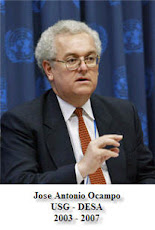
This mis¬management of monies of the Trust Fund was not detected immediately, on account of obstruction from the responsible Division (DPADM/DESA) which consistently refused to comply with provisions in the Trust Fund Agreement requiring it to account on economic matters. An intervention was needed, from Mr. Christopher B. Burnham, to set in motion the process of an internal audit and to secure replies, albeit with great delay, to some questions which the responsible Minister of IPAD had asked as early as June 2004, by letter to Mr. Ocampo and Mr. Bertucci, senior officials in charge of the management of the UNTC and the Trust Fund. We are talking, in effect, of a process which was first initiated in 2004 and 2005, but has yet to be completed.
Analytically, we report the following:
The Greek Government, by letter of the Minister of IPAD3, Professor P. Pavlopoulos, requested the conduct of an external audit of the Programme and the Fund. This, the Minister put forward to Mr. Guido Bertucci, Director of DPADM/UNDESA. He repeated the request to Mrs. Inga-Britt Ahlenius, Under-Secretary-General for the OIOS4.
After the passage of several months, an answer was received from the Under¬Secretary-General of the Department of Management Mr. Christopher B. Burnham5. Mr. Burnham expressed regret for this delayed response to the Minister’s request. He added that, after consultations with Mrs. Ahlenius, an internal audit had been launched, which was expected to reach its conclusion towards the end of July.
In the framework of this audit, two Auditors visited Greece during the third week of July. They met with the former professional staff of the UNTC, Dr. Panos Liverakos, Chief Technical Advisor, and Ms. Anne Caroline Tveoy, former Public Administration Officer and Officer-in-Charge. They also met with a member of the responsible Division (D1) of the Ministry of Foreign Affairs, Ambassador Alexandros Rallis, with the Minister of IPAD and the Secretary-General of the same Department of government. At the close of the working session, the Secretary-General gave the auditors a list of questions6 on which the Government wished to receive detailed replies.
This mismanagement and misuse, have been corroborated by the Under¬Secretary-General Mr. Christopher B. Burnham in a letter which he addressed to the Minister of IPAD7. In this letter, Mr. Burnham briefly referred to the progress of the audit and also thanked the Minister for his cooperation, noting that his insistence had helped to bring to light a number of deficiencies not of the UNTC – this should be stressed - but of the UNDESA Division charged with its supervision, and headquartered in New York.
The deficiencies in question, which the Hellenic Government had repeatedly underscored and brought to the attention of the United Nations, could be summed up as follows:
- [a] Non-compliance with the terms of the Trust Fund Agreement, as ratified by Parliament on 17 July 20028; specifically:
- submission of detailed financial data on an annual basis;
- submission of progress reports on a six-monthly basis;
- provision of the requisite administrative and technical support (backstopping) to the Programme; and - [b] Lack of any consistency and transparency in the actions of the Division (DPADM) tasked with the supervision and management of the Centre.
These rendered it impossible for Centre’s professional staff to implement its Programme and to accomplish goals to which Mr. Bertucci himself had agreed in December 2004 after his consultations with the Minister of IPAD9.
The complete lack of consistency and transparency in the actions of the Division entrusted with the management of the UNTC became abundantly clear during the final months of the Centre’s operation – or to be more precise, deficient operation. Specifically, on 5 December 2005, Mr. Guido Bertucci, Director of DPADM, sent a letter10 to the Minister of IPAD, which announced his intention to close the Centre down on 31 March 2006. This intention, Mr. Bertucci repeated in a letter11 to Ambassador F. Verros, Director of the responsible Division of the Ministry of Foreign Affairs. Indeed, in this second letter, Mr. Bertucci confirmed, not only the removal of the UNTC’s Chief Technical Advisor, which had already taken place on 31 December 2005, but also his intention to inform the landlord of the building housing the Centre that he would take all measures in order to surrender the building in due form by 31 March 2006.
However, as stipulated, in a subsequent letter12 of the Secretary-General of IPAD, the Centre did not close on 31 March as stated, but continued to be open though idle for six months, at a monthly cost of US $ 16,000 approximately. The Secretary-General demanded immediate remedial action to put an end to this situation. He added that, if the Centre remained open past 15 October 2006, the corresponding expenditures would burden DPADM exclusively. In response to this ultimatum, the Director, Mr. Bertucci instructed his subordinate to go to Athens immediately and close the Centre down on 31 October 2006.
In addition to lack of transparency, accountability, consultation and cooperation on the part of DPADM (New York), the management of the Centre consistently exemplified obstruction and lack of any continuity in the pursuit of the objectives of the Centre, as well as systematic passing the blame for failures on its successive heads (Chief Technical Advisors), i.e., Mr. Tsekos (2000-2004) and Mr. Liverakos (2004-2005). In retrospect, it is manifest that obstruction was intended to maximize the funds of the Trust Fund and Centre, which would remain available for totally extraneous purposes, which only now belatedly have surfaced: payment of numerous “consultants”, who never produced any output related to the Centre; whose employment did not have either specific goals or outcomes.
The above corroborates the view that the Trust Fund became the victim of very grave mis-management. This view was clearly expressed, at a very early stage, by the Minister of IPAD in a letter13, which requested the return and restitution not merely of the remaining balance of the Trust Fund, but also half the amount (13%), which DPADM received in return for support services. Specifically, the Minister emphasised that, in a period of three years (2 004- 2006), the Centre was operational for barely 18 months.
In conclusion, it is necessary to emphasise the following:
- [a]From the very early start and assumption of his duties in March 2004, the Minister of IPAD despatched repeated messages to the responsible agency requesting the submission of the mandated reports together with details on assets and expenditures of the Centre14;
- [b]The Director of DPADM, Mr. Bertucci consistently refused to account, as he was required under the terms of the Trust Fund Agreement. Indeed, he falsely claimed – in his letter of 5 December 2005 – that an audit could not be conducted. He further “threatened” closure of the Centre, by 31 March 2006. As stated, however, this closure did not take place in fact until six months later and only after despatch of an ultimatum by the Secretary-General of the Ministry of IPAD, Mr. Vassilios Andronopoulos;
- [c]The claim to restitution remains in force. It demonstrates the country’s firm commitment to recovering the amounts which correspond to funds that were embezzled for reasons unrelated to the Centre, or money paid in return for support services which the Centre did not receive;
- [d]Lastly, as might be expected for any further action, we shall await the outcomes of the audit, which the responsible Department of the United Nations is currently concluding.


 This one gets filed under "