Tuesday, 7 June 2011

In Bed with Radical Feminists: The U.N.’s Misguided Women’s Agenda

Published on June 3, 2011 by Grace Melton click here to view this at Heritage.org

From the halls of the United Nations at Turtle Bay to its expansive buildings in Geneva, radical feminism is among the predominant views dictating social policy and programs. Feminists lead their international agenda from the new United Nations Entity for Gender Equality and the Empowerment of Women, known as “UN Women,” often in partnership with a host of nongovernmental organizations (NGOs) from the U.S. and Europe that espouse a radical social agenda. In turn, NGOs such as the International Planned Parenthood Federation, Advocates for Youth, and the Center for Health and Gender Equity swarm to U.N. meetings and use them as forums to perpetuate their agenda.

Alarmingly, this radical feminist agenda reduces the diverse economic, political, and social needs of women around the world to issues of sexuality and fertility. At the U.N., nearly every conversation, forum, and program that purports to be concerned with women has a monomaniacal focus on such matters as sexual rights, reproductive health, contraception, and abortion.

The United States, under the Obama Administration, has aided this radical feminist agenda, working in lockstep to promote and fund UN Women and partner with radical NGOs.

UN Women

Created in 2010 by the U.N. General Assembly, UN Women is a super-agency that encompasses four previously existing U.N. entities: the Division for the Advancement of Women, the International Research and Training Institute for the Advancement of Women, the Office of the Special Adviser on Gender Issues and Advancement of Women, and the United Nations Development Fund for Women. UN Women’s stated mission is “to support inter-governmental bodies…in their formulation of policies, global standards and norms; to help Member States to implement these standards;…[and] to hold the UN system accountable for its own commitments on gender equality.”[1]

Time and again, representatives of the Obama Administration have pledged support—political and financial—to UN Women and its mission, prioritizing the backing of this feminist entity over other concerns. Consider this statement by Susan Rice, U.S. Ambassador to the U.N.:

The United States is deeply committed to ensuring [UN Women’s] success. We are grateful that so many countries with strong records of upholding women’s rights have agreed to serve on the Executive Board. For our own part…we intend to maintain a strong, constructive, and continued presence here.[2]

What Ambassador Rice failed to mention, however, is that Saudi Arabia and China, among other countries with dismal records of upholding human rights—especially for women—also sit on the executive board of UN Women.[3]

Commission on the Status of Women

The theme of this spring’s Commission on the Status of Women (CSW) was “access and participation of women and girls to education, training, science and technology.” Rather than reading, math, computer skills, and vocational training, a number of panels and events focused on “comprehensive” sex education.[4]

For example, the Population Council hosted a side event with the International Planned Parenthood Federation and the International Women’s Health Council to introduce advocates from other NGOs and delegates from around the world to their new strategy, “It’s All One Curriculum: Guidelines and Activities for a Unified Approach to Sexuality, Gender, HIV, and Human Rights Education.”[5] The curriculum’s ultimate goal: “to enable young people to enjoy—and advocate for their rights to—dignity, equality, and healthy, responsible, and satisfying sexual lives.”

The creators of this curriculum claim that its perspective is appropriate for all young people irrespective of their cultures. Nevertheless, parents and policymakers around the world might be surprised upon examining its content.

For example, the first unit is entitled “Sexual Rights Are Human Rights.” It ignores anything controversial about that assertion and discusses so-called sexual rights[6] alongside the more generally accepted political rights. The section on relationships discusses “long-term domestic relationships or partnerships,” listing marriage as one such type of relationship often entered into out of social, religious, or economic pressures; nevertheless, it calls for the legalization of same-sex marriage.

Not only does the curriculum advocate same-sex marriage and the normalization of homosexuality; it also calls for the acceptance and legalization of prostitution (euphemistically referred to as “sex work”) and unencumbered access to legal abortion, which it asserts as a human right. It says that parenthood and marriage need not be related, that gender norms are socially constructed and vary across time and cultures, and that students should be encouraged to explore their sexual desires. Absent in the several hundred pages of curriculum and activities is any positive discussion of abstinence other than mentioning it as a possible means of contraception or an effective way to avoid contracting a sexually transmitted infection.

In another example of the ideological battles that radical feminists provoke at these U.N. commissions, the CSW had to postpone its conclusion because negotiations over the outcome document stalled over the definition of gender.[7] While previous references to the term gender in negotiated U.N. documents have referred to the male and female sexes, this debate centered on a renewed push to expand the definition of gender to include socially constructed roles and sexual orientation. The definition of gender is especially important to the documents that emerge from CSW, as nearly every recommendation refers to mainstreaming or promoting a “gender perspective,” achieving “gender equality,” or implementing “gender-sensitive” policies.[8] When the CSW finally concluded its session, the agreed-upon conclusions did not include a new definition of gender.[9]

Commission on Population and Development

The theme of this year’s Commission on Population and Development (CPD), “fertility, reproductive health and development,” was more explicitly in accordance with the feminism typical of U.N. meetings. The meeting centered on the world’s “unmet need for contraception,” which was highlighted in a much-discussed report from the Secretary-General calling for greater investment in family planning.[10]According to the report, “[a]ccess to the widest possible range of safe and effective contraceptive methods is not yet a reality in many countries.”[11]

The Secretary-General’s report is emblematic of an idea that pervades the development community, especially among the radical feminists in and around the U.N.: In the case of women who desire more children—never mind cultures or religions that celebrate large families—attitudes must be changed. Consider this quotation from the report:

Unmet need [for contraception] is related to the desire for children, and in many high-fertility countries couples desire several children. However, the evidence suggests that desires are changing and that, in some high-fertility countries, the proportion of women wanting no more children after they have had three or four is high.… Nevertheless, there are still at least eight countries where 78 per cent or more of married women want to have more children after having had four. In those populations, satisfying the currently low unmet need for family planning services would be only the first step in the transition to lower fertility and would have to be buttressed by other strategies to change norms concerning the number of children desired.[12]

The annual meeting of the CPD is consistently a battleground upon which radical feminists and their U.N. allies fight conservative and pro-family advocates over acceptable language in outcome documents and, more broadly, over political and funding priorities in development. When the lines are drawn among the delegations to the CPD, the feminist camp usually includes European and Western delegates, while their opponents most often include developing countries and the Holy See.

Reflecting current Administration policy, the U.S. delegation supported the liberal position. In her statement on behalf of the U.S. to the CPD, State Department official Margaret Pollack touted U.S. efforts “to ensure universal access to reproductive health” and promised that “[a]ccess to reproductive health services, including family planning, is a central element of the United States’ development work.”[13] At a later side event during the CPD, Pollack stated that “The [Obama] Administration’s strong financial commitment for family planning will help reduce the estimated 52 million unintended pregnancies and 22 million abortions that take place each year.”[14]

This year’s negotiations were so tense, especially over the contentious topics of “reproductive rights” and “sexuality education,” that no genuine consensus document could be reached, and the CPD instead adopted the facilitator’s text[15] in a so-called compromise.[16]

Addressing the Real Needs of Women

Too often, radical feminists and their allies within the U.N. bureaucracy dominate the social policy agenda, emphasizing sexual and reproductive rights when it comes to issues concerning women and even children. Recent events at this season’s CSW and CPD illustrate this enduring trend. Given the significant—sometimes life-threatening—issues women face around the globe, the opportunity costs of misdirection of international attention and resources toward this agenda are tragic.

The U.S. should consider distancing itself from UN Women and many of its projects. In development and aid efforts, the U.S. should work conscientiously to identify and address the real needs of women around the world, such as advancing maternal health, preventing and treating disease, securing legal rights, and seeking greater economic empowerment. No one—including the U.N. and Western NGOs—ought to define women and their needs solely, or even primarily, by their sexuality or fertility.

Grace S. Melton is Associate for Social Issues at the United Nations in the Richard and Helen DeVos Center for Religion and Civil Society at The Heritage Foundation.

Show references in this report


[1] UN Women, “About UN Women,” at http://www.unwomen.org/about-us/about-un-women/ (June 2, 2011).

[2] “Remarks by Ambassador Susan E. Rice, U.S. Permanent Representative to the United Nations, at the First Meeting of the Executive Board of UN Women,” January 24, 2011, athttp://usun.state.gov/briefing/statements/2011/155165.htm (June 2, 2011).

[3] For further reading on the Obama Administration and human rights at the U.N., see Grace S. Melton, “Missing the Point on Human Rights,” The Foundry, December 17, 2010, athttp://blog.heritage.org/?p=48560; Brett D. Schaefer, “Elections for U.N. Human Rights Council Underscore Need for Reform,” Heritage Foundation Backgrounder No. 2417, June 2, 2010, athttp://www.heritage.org/Research/Reports/2010/06/Elections-for-UN-Human-Rights-Council-Underscore-the-Need-for-Reform.

[4] For more examples of side events, see Lauren Funk, “‘Schools Need to Teach about Orgasms,’ Says NEA to UN,” Catholic Family and Human Rights Institute, March 3, 2011, at http://www.c-fam.org/publications/id.1798/pub_detail.asp (June 2, 2011).

[5] Population Council, “It’s All One Curriculum, Guidelines and Activities for a Unified Approach to Sexuality, Gender, HIV, and Human Rights Education,” athttp://www.popcouncil.org/publications/books/2010_ItsAllOne.asp (June 2, 2011).

[6] Ibid., p. 28.

[7] For more on stalled negotiations, see Susan Roylance, “Gender Definition Debated at UN,” Deseret News, March 9, 2011, at http://www.deseretnews.com/blog/54/10011603/Families-around-the-world-Def-of-gender-debated-at-UN.html?pg=1 (June 2, 2011).

[8] For further discussion of gender mainstreaming, etc., see Jennifer Marshall, Melissa Pardue, and Grace Smith, “Beyond the Words at Beijing + 10: How U.N. Policy Falls Short of Women’s Best Interests,” Heritage Foundation Backgrounder No. 1829, February 28, 2005, athttp://www.heritage.org/Research/Reports/2005/02/Beyond-the-Words-at-Beijing-10-How-UN-Policy-Falls-Short-of-Womens-Best-Interests.

[9] See U.N. Document EICN.6/2011/L.6, March 8, 2011, athttp://www.un.org/ga/search/view_doc.asp?symbol=E/CN.6/2011/L.6 (June 3, 2011).

[10] Commission on Population and Development, “Fertility, Reproductive Health and Development,” E/CN.9/2011/3, January 18, 2011.

[11] Ibid., p. 18, paragraph 46.

[12] Ibid., p. 19, paragraph 49.

[13] Margaret Pollack, “Statement by the United States at the U.N. Commission on Population and Development,” U.S. Department of State, April 11, 2011, athttp://www.state.gov/g/prm/rls/rmks/2011/160559.htm (June 2, 2011).

[14] Margaret Pollack, “Achieving the ICPD Agenda by 2014 and the MDGs by 2015: Advancing Family Planning and Reproductive Health,” U.S. Department of State, April 13, 2011, athttp://www.state.gov/g/prm/rls/rmks/2011/161013.htm (June 2, 2011).

[15] Commission on Population and Development, “Forty-Fourth Session, Resolution Adopted at the Closing Plenary Session, Fertility, Reproductive Health and Development,” April 15, 2011 athttp://www.un.org/esa/population/cpd/cpd2011/cpd44-resolution.pdf (June 2, 2011).

[16] For further explanation of the CPD negotiations, see Catholic Family and Human Rights Institute, “Development Conference Document Ignores the Desires of Nations,” April 20, 2011, at http://www.c-fam.org/publications/id.1835/pub_detail.asp (June 2, 2011).

UN refugee agency poisons the push for Mideast peace: UNRWA only furthers Palestinians' suffering

President Obama met with Israeli Prime Minister Benjamin Netanyah at the White House in May.
When Israeli Prime Minister Benjamin Netanyahu came out of his lengthy sitdown with President Obama, he focused as much on the question of the right of return of Palestinian refugees as he did on the dispute over the 1967 boundaries. "It's time to tell the Palestinians forthrightly it's not going to happen," said Netanyahu - and with good reason, for within a matter of just a few years, an influx of refugees would effectively erase Israel as a Jewish state.

If Obama agrees, there is a significant step he can take now - namely, working to dismantle the United Nations Relief and Works Agency for Palestine Refugees in the Near East (UNRWA), whose very existence has been built around perpetuating this so-called right.

The call for a Palestinian right of return is based on a highly specific - and discredited - reading of history, which assumes Israeli responsibility for creating the refugee problem via "ethnic cleansing." Restitution from the allegedly guilty party, then, involves the eventual return of the refugees and their descendants, even when they are generations removed from the initial "crime" of Israel's founding.

To an outsider, UNRWA may appear to be a humanitarian group providing education, social services and other aid to Palestinian refugees in Jordan, Lebanon, Syria, the West Bank and Gaza Strip. In reality, it helps destroy the chances of Arab-Israeli peace, promotes terrorism and holds Palestinians back from rebuilding their lives. And U.S.taxpayers fund all this to the tune of nearly $200 million a year.

An anomaly within the world of refugee relief, UNRWA's job is to keep Palestinian refugees in suspended animation - and at low living standards, and in camps - until a formal peace settlement is reached and recognized by the General Assembly.

The suffering and anger of these millions is maintained as a weapon to encourage them toward terrorism and intransigence. That stymies the peace process rather than furthering it.

For decades, UNRWA schools have bred anti-Western, anti-American and anti-Semitic indoctrination. Agency-operated - and, by extension, America-funded - schools decorate their classrooms with flags and banners celebrating terrorist groups. All this must stop if we ever want to see any kind of true progress toward peace.

The vast majority of UNRWA's employees are Palestinian, and many local offices are dominated by radicals. UNWRA facilities have been documented as being used to store and transport weapons, and even serving as military bases.

That's not all. UNRWA workers have abused their diplomatic privilege to engage in or encourage terrorism. Television crews have filmed UNRWA employees escorting armed Palestinian fighters in UN vehicles.

As such, UNRWA has broken all the rules that are presumed to govern humanitarian enterprises. But that should come as no surprise; by design, UNRWA is the opposite of other refugee relief operations, such as those orchestrated by the United Nations High Commissioner on Refugees. UNHCR seeks to resettle refugees; UNRWA is dedicated to blocking resettlement while refugees await their rightful return to Israel.

If the world community is serious about preparing the Palestinian people for peace with Israel, it's long past time it recognizes UNWRA as part of the problem.

All the services UNRWA currently provides to the Palestinians should be handed over to parallel agencies within the UN.

It seems like a silly thing to have to say, but let us say it bluntly: A UN agency that's invested in perpetual conflict will not help bring about peace.

Romirowsky is a lecturer in history at Pennsylvania State University and an adjunct scholar at the Middle East Forum.

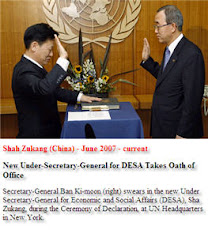
Programme evaluation of the Department of Economic and Social Affairs

Report of the Office of Internal Oversight Services

E/AC.51/2011/2


UN-DESA’s role has been less clearly defined. The Department operates in crowded territory, with responsibility for development shared within the United Nations system with the United Nations Development Programme (UNDP) and a range of specialized agencies. While it has sometimes been described as the United Nations think-tank on economic and social issues, the Department is not the only entity to fill such a role. One area of potential overlap with other entities of the United Nations system is capacity-building.


The Department’s impact is felt the most when it focuses on its areas of greatest strength. What differentiates the Department, and remains the source of its comparative advantage, is its support for the policy and normative work of the intergovernmental bodies, the global scope of its work, its convening power and its role as analyst rather than advocate.


Within such a complex Department, fostering coherence is an ongoing management challenge. Opportunities for cross-divisional collaboration and complementarities have not been fully exploited. Where such opportunities have been seized, the benefits have been acknowledged by staff and stakeholders, but a more systematic approach to the identification of such synergies is needed.


Intellectual leadership was not always supported by effective management practices. Staff concerns about the transparency and consistency of decisions and the quality of consultation and communication within the Department have been noted in previous OIOS reports and were again evident in the current evaluation.


OIOS recommends that the Department of Economic and Social Affairs:


• Further sharpen its strategic focus;

• Improve coordination with partners;

• Develop a Department-wide publication and outreach strategy;

• Strengthen internal coordination and communication.


OIOS also offers the following questions for consideration by the Committee for Programme and Coordination:


• Further clarification of the Department’s mandate on policy coherence and coordination;

• Alternative placement of the post of Assistant-Secretary-General for Policy Coordination and Inter-Agency Affairs;

• Establishment of a “Chief Economist” title.

Sunday, 5 June 2011

Who's lying - Ban Ki Moon or the PLO? (Or both?)


JPost reports:
UN Secretary-General Ban Ki-moon on Thursday voiced his support for the establishment of a Palestinian state, but said that the matter is in the hands of the UN General Assembly, Palestinian Authority officials quoted him as saying.

The officials said that the secretary-general, who met with PA President Mahmoud Abbas in Rome, also expressed hope that members of the UN would show understanding for the Palestinian statehood bid.

The UN website says:

The Secretary-General met today with H.E. Mr. Mahmoud Abbas, President of the Palestinian National Authority.

The Secretary-General expressed his concern at the lack of progress in the Middle East peace process, but said that he had been encouraged by the vision laid out in U.S. President Obama's recent speech on the Middle East.

President Abbas briefed the Secretary-General on efforts to form a new Palestinian Government. The Secretary-General noted that Palestinian reconciliation should be based on PLO commitments and Quartet principles. He said the reconciliation effort should be given a chance.

The Secretary-General said achieving the goal of an independent, viable Palestinian state was long overdue. The Secretary-General thanked President Abbas for outlining Palestinian thoughts and plans on working toward statehood and on what was required for a return to negotiations.

The Secretary-General stressed that now, more than ever, it was important that the Palestinians and Israel engage in real, genuine and meaningful negotiations. The Secretary-General said he knew it was the Palestinian National Authority's priority to return to negotiating table.
So did Ban Ki-Moon say that "the matter was in the hands of the UN General Assembly"? The UNGA cannot establish a state and it seems unlikely that Ki-Moon would say otherwise. The UN press release certainly says nothing of the sort.

On the other hand, Ki-Moon is clearly lying when he says that it is "the Palestinian National Authority's priority to return to negotiating table." This entire UN exercise is their attempt to avoid going to the negotiating table.

Furthermore, the UN press release implies that the PNA has been doing negotiations, when in fact it is the PLO that has been - the PNA is strictly limited to domestic governing, not foreign affairs. When Abbas meets with internationals, it is as a representative of the PLO, not the president of the PA.

So to answer the question - both of them are liars.

(h/t Mike)

How EU spends £20m a year promoting left-wing causes in the U.S.

CLICK HERE FOR THIS STORY ON DAILYMAIL.CO.UK

By TIM SHIPMAN

Brussels is pouring nearly £20million a year from its human rights budget on lecturing the Americans on left-wing causes.

The EU Human Rights Fund is intended to help promote Western values in the developing world. But a shock report has found at least £17million of cash – around £2million from British taxpayers’ – has been ploughed into promoting the pet causes of Eurocrats in the U.S.

It is being spent on promoting abolition of the death penalty, discussion of climate change, green energy, and the International Criminal Court – all controversial subjects in the U.S.

Growing influence: European Union chiefs are spending millions of pounds promoting left-wing causes in the U.S.

Growing influence: European Union chiefs are spending millions of pounds promoting left-wing causes in the U.S.

The study by the Heritage Foundation, a centre-right Washington think-tank, found a further £4million has been ploughed into pro-EU propaganda in the U.S., including funds for advertising and publicity material.

More than £3million has been funnelled to American universities to promote the benefits of European integration and a further £3million to think-tanks who want to study EU affairs.

The European Commission’s own accounts show millions have also been paid to unnamed individual opinion formers in the U.S.

The report’s British author Sally McNamara said: ‘It is impossible to justify EU human rights budgets being spent in one of the world’s freest nations.’

Tory MP Douglas Carswell said: ‘The U.S. was founded by North Americans fed up with Europeans interfering in its internal affairs.

'The U.S. as a country has done more to bring liberty and human rights to the world than anyone in Europe. They don’t need any lessons from Brussels.’

Stephen Booth, research director of the Open Europe think tank said: ‘The EU has absolutely no mandate to wade in to politically sensitive debates in the U.S.’

External action in the UN system

CLICK HERE FOR THIS STORY ON EUobserver

BREGT SAENEN

EUOBSERVER / COMMENT - The United Nations General Assembly on 3 May 2011 voted on the participation of the European Union in the work of the United Nations, granting the Union increased rights as a quasi full member of the Assembly.

This outcome has been welcomed by decision-makers and commentators as a breakthrough for effective external action, assumed to follow from increased EU unity. But research has shown that speaking with a single EU voice in the UN system might not be the silver bullet it is thought to be.

The Assembly approved a Resolution granting the EU most of the rights reserved for full members (i.e. states). It now has the right to speak, make proposals and submit amendments, raise points of order, and circulate documents. The Resolution stops short of giving the EU the right to vote, but clearly its status is much improved

It itself, recognising a regional organisation as a quasi full member is an important step for the UN. With most of its institutions and agencies set up not long after World War II, it is a decidedly nation based system. Adopting this resolution, which also includes an opening for other regional organisations to follow the EU's lead, signifies a turning point, however modest it might seem at first.

From the perspective of the EU, it is an equally important recognition of its growing importance as an actor in global affairs. With European Council President Herman Van Rompuy and High Representative for foreign affairs Catherine Ashton taking up seats beside other world leaders, the UN is perceived to validate this trend.

The outcome of the vote has also been welcomed by decision-makers and commentators as a breakthrough for effective external action in the multilateral context of the General Assembly. Crucially, it is assumed that increased coordination between its member states will enable the EU to play a more important role in global affairs. Put differently: speaking with a single EU voice will improve the effectiveness of its external action.

Assuming EU unity will automatically lead to effective external action is far from unproblematic.

In recent years, academic research has shown that the EU's bloc mentality can in some cases lead to negative results. Key examples are Karen Smith's (London School of Economics) soft balancing against EU positions by the Global South in the Human Rights Council and Robert Kissack's (Instutit Barcelona d'Estudis Internacionals) research on the unwillingness of non-European countries to ratify International Labour Organization Conventions containing high, European standards.

In both cases, EU unity triggers hostility from the developing world, thus diminishing its effectiveness. The 'iconic meaning' of ever more unity seems to have blinded the EU from these negative effects following from its desire to speak with a single voice.

The basic assumption that EU unity will automatically lead to effective external action has come to the fore with former UN deputy general secretary Mark Malloch Brown commenting that the next step for the EU is to seek quasi full membership in other UN institutions. However, this underestimates the heterogeneity of the UN system and its impact on the effectiveness of EU unity.

While it is reasonable to expect increased EU coordination to strengthen its position and impact in the General Assembly where decisions are made by (two-thirds) majority vote, this is not always the case in the highly diverse UN system. Other institutions follow different procedures to reach an outcome, wherein the importance of EU unity might be secondary to its ability to reach out and compromise on its common position during negotiations, e.g. in the case of consensus voting.

This is one lesson that seems to be overlooked when assuming EU unity will automatically lead to effective external action in the UN system.

This is not to say that reverting back to 27 independent national positions would be a better option, far from it. Acting as a Union allows EU member states to influence global affairs to an extent none of them are still capable of independently. There is ample evidence of EU unity improving its effectiveness and impact in multilateral institutions.

The fact remains that speaking with a single EU voice does potentially also entail negative effects for its position and impact in the UN system. It is not a silver bullet which automatically leads to more effective external action and we know little about the underlying conditions informing the potential malign effects.

The EU would be well advised to take a reflexive stance towards speaking with a single voice during multilateral negotiations, as there might sometimes be more effective means to increase its position and impact as an actor in global affairs.

The author is PhD Candidate at the Centre for EU Studies at the Ghent University

Low Returns On 40-Year Investment In Palestinians

CLICK HERE FOR STORY ON PROPAGANDISTMAG.COM

Posted by Hadar Sela

This year marks the fortieth anniversary of the commencement of European Union contributions to the Palestinians. The EU has been UNRWA's largest donor since 1971 and over the last decade has provided that organisation with almost one billion Euros. Since the establishment of the Palestinian Authority under the Oslo Accords in 1993 it has, in addition, been a major donor to that administration.

The numbers are truly staggering; the EU has pledged to provide 28.4 percent of the total humanitarian aid budget for 2011 – US $60,013,647 – making it the top contributor. That figure does not include donations from individual EU member countries or separate donations to shore up the PA budget. In 2010, EU contributionsto the PA budget as set out in the Palestinian Reform and Development Plan amounted to 199.90 million Euros. Funds donated by member states of the EU amounted to an additional 62.70 million Euros.

When combined with the additional donations from the World Bank, the United States, Japan and the notably less significant contributions from Arab states, the total amounts of money donated (US $3.96 billion in 2009-2010) mean that the Palestinians are still the highest per capita recipients of aid in the world, even 18 years after the establishment of the Palestinian Authority.

As Europe sinks ever deeper into financial turmoil itself, taxpayers in EU countries must be asking themselves if the tax money paid both directly to their own governments and indirectly to the EU could not be better employed in reviving their own economies and supporting unemployed and poverty stricken residents of the EU. They may also be wondering if their 40 years of investment in UNRWA and 18 years of investment in the Palestinian Authority have actually brought any benefit to the Palestinian people. After all, throwing money at an investment which yields no returns is not financially savvy.

Not only has EU and other investment in UNRWA not solved the problem of Palestinian refugees, it has actually perpetuated it by forcibly keeping second, third and even fourth generations in permanent statelessness. UNRWA figures show that because Palestinian refugees are the only ones in the world who pass that status down the generations, their number has grown from 711,000 in 1950 to 4.7 million in 2010. Despite the fact that many of the refugees live in PA controlled areas, they are still forcibly held in refugee status as part of the pan-Arab approach of calculated perpetuation of the problem which has also prevented many Arab countries from granting them citizenship.

As for the Palestinian Authority itself, perhaps the best indication of the lack of efficacy of international donations in helping it become an autonomous, functioning body is the fact that in the year 2000, 10.47 percent of the Palestinian Authority's GNP came from donor aid. By 2007 that percentage had risen to 35.9 percent and in 2010 topped 60 percent. Between 2009 and 2010, despite a 20 percent increase in donor contributions, the Palestinian Authority budget was still in arrears.

One explanation for this is the fact that much of the donor aid is being used to pay PA wages rather than being used for investment in industry, human resource development or infrastructure. Potential private investors find themselves unable to compete with wages in both the bloated public sector and foreign NGOs – the latter also becoming an increasingly popular option for unemployed young European graduates .

And so, despite the fact that the international community has been pouring unprecedented amounts of money into the Palestinian Authority for eighteen years, the ordinary man and woman in the street are actually little better off and often still rely on hand-outs because a viable economy is not being built from the foundations.

For some time, the lone voices of a few European tax-payers have been demanding more accountability on the subject of donations to the Palestinian Authority. Their concerns began during the Arafat years when, between 1994 and 2000, some $900 million 'disappeared' from the PA bank accounts into Arafat's private holdings and 'Presidential Fund', very little of which was ever recovered. Despite clear evidencethat at least some of that donated money had been used to finance terrorism, not only did the EU not see fit to suspend aid to the PA, it even increased its contributions during the years of the second Intifada, bizarrely claiming that its "investigation has found no conclusive evidence of support of armed attacks or unlawful activities financed by the European Commission's contributions to the budget."

If Israelis began then to wonder how many of their countrymen had died as a result a bullet paid for by the EU or a suicide bomber whose family had received payments taken from the donations of European tax-payers and why a Palestinian Authority which had transgressed the Oslo Accords by initiating the second Intifada was being kept afloat and even financially rewarded for doing so, those concerns have not disappeared.

The PA continues to this day to promote incitement in school text books, on government-run television stations and in government-funded mosques. A British organisation called 'The Tax-payers' Alliance' has issued reports on this subject with the aim of securing accountability for the British donations to the PA which are being used to incubate the next generation of suicide bombers and terrorists rather than promoting peace and tolerance in the region. Whilst Britain itself has passed laws against the glorification of terrorism in the UK, it continues to donate aid to the Palestinian Authority which erects monuments to terrorist 'martyrs' and names public squares, institutions and sports tournaments after suicide bombers. Recently, the Palestinian Authority also passed legislation which will provide monthly wages for convicted terrorists imprisoned in Israeli jails, including those who hold Israeli citizenship. This policy is, however, not new; the PA has been making such payments since 1994.

It is, therefore, little wonder that EU and other generous donations have done little to promote either peace or prosperity for the Palestinian people or the region as a whole over the last 18 years. And yet, the World Bank, which mentors the Palestinian Authority, continues to adhere to the failed formula of annual international hand-outs, demanding little real accountability on behalf of the tax-payers who ultimately provide the funds.

In its report of April 2011 to the Ad Hoc Liaison Committee, the World Bank states that in the fourth quarter of 2010, unemployment in the PA administered West Bank was 16.9 percent. Statistics for unemployment in EU countries in 2010 reveal that Estonia also had 16.9% unemployment, Spain 20.1 percent, Latvia 18.7 percent and Lithuania 17.8 percent. The same report states that the poverty rate stood at 20 percent in the West Bank and Gaza in 2009. European Union figures for 2008 show that the general level of poverty was 17 percent, with Latvia at 26 percent, Romania 23 percent, Bulgaria 21 percent and Spain, Lithuania and Greece all at 20 percent..

As Spanish citizens take to the streets in protest at the high unemployment rates in their country and many European nations find themselves unable to shake off the economic crisis and forced to implement severe cuts in public spending, it is surely time for European tax-payers to begin to demand real accountability from their governments regarding the millions of tax-Euros invested every year in a Palestinian Authority which not only uses those funds to promote and perpetuate terror and violence, but continues to take more money as every year goes by from its European neighbour. Forty years of massive levels of EU investment in the Palestinians have not only not resulted in peace, but paradoxically made it increasingly less likely. Surely Europe could, particularly in the current climate, find more profitable use for its tax-payers' money.

Hadar Sela is a Contributing Writer for The Propagandist

Cocktail parties, private jets and Tiffany jewellery on £7m EU taxpayer-funded gravy train

CLICK HERE TO VIEW THIS STORY ON DAILYMAIL.CO.UK

By JASON GROVES

Peter Mandelson

EU days: Peter Mandelson was Britain's

commissioner with Baroness Ashton

European chiefs have landed taxpayers with a ‘grotesque’ expenses bill running into millions of pounds that highlights once again the culture of excess in Brussels.

Private jets, luxury hotels, cocktail parties and even Tiffany jewellery were among the items claimed. MPs last night called for an inquiry following the release of astonishing details of commissioners’ lavish lifestyles.

In one case Jose Manuel Barroso, the European Commission president, ran up a £24,600 hotel bill during a luxury four-day stay in New York.

The figures reveal that the EU’s 27 commissioners clocked up a £6.6million bill for hiring private jets in the four years to 2010.

With extra expenses, the bill for their high life comes to £6.99million – but the sum is likely to be far higher.

The figures, extracted from official releases and answers to Parliamentary questions, provide a snapshot of the culture of excess – but sources say they represent only the ‘tip of the iceberg’. The full extent is unlikely ever to be revealed as the figures are not routinely released.

Britain’s commissioners during the period were Peter Mandelson and Baroness Ashton. In 2009 alone, the Commission billed taxpayers £265,000 for cocktail parties.

Events included a £11,638 bill for a cocktail party for TV weathermen from across Europe, and two cocktail parties to celebrate Europe Day, at a total cost of £9,597.

The Commission also ran up a £66,000 bill for a ‘science’ event in Amsterdam which boasted a ‘night filled with wonder like no other… state-of-the-art technology, challenging art, combined with trendy cocktails, surprising performances and top DJs’.

Further figures reveal it spent £17,741 over three years on luxury jewellery for VIPs who agreed to appear at EU events. Figures included spending at the renowned jewellers Tiffany.
The Commission is bidding for a five per cent increase in its £117 billion-a-year budget.

Tory MP Chris Heaton-Harris called for an investigation. The former MEP, who campaigned against Brussels waste, added: ‘The European commissioners behave like a royal court.

There is so much power concentrated in those 27 individuals and they are not directly accountable to anyone. They really do live it up. It is a proper jet-set lifestyle at our expense.’

The figures were unearthed following an investigation by the London-based Bureau of Investigative Journalism. Its editor Iain Overton said: ‘Our findings raise questions not just about taxpayers’ money being wasted, but also about how accountable the European Commission is for its spending.’

Nigel Farage, leader of the UK Independence Party, said ‘They [commissioners] are unaccountable, out of control. But I’m afraid I am not surprised because they treat taxpayers’ money with contempt.’

Martin Callanan MEP, Conservative leader in the European Parliament said: ‘When the commission said it needs a five per cent budget increase to “pay its bills”, we didn’t think it meant private jets, Tiffany jewellery and cocktail parties.

‘This is exactly the sort of spending that needs to be slashed.’
Mr Barroso’s £24,600 hotel bill covered a four-day stay at New York’s five-star Peninsula Hotel for himself and eight officials.

The Commission said it related to his attendance at a UN General Assembly, and the hotel was chosen to ‘fulfil a number of protocol and security requirements’.

A Commission spokeswoman last night claimed that the latest figures were ‘taken out of context and deliberately misinterpreted’. She said chartering private planes was ‘strictly regulated’ and only undertaken when there was no alternative.

She said that Mr Barroso’s New York hotel bill included the cost of hiring meeting rooms. She added that the refreshments bill was only a small percentage of the cost of the Amsterdam event.

John Bryson member of the U.N. Secretary-General’s Advisory Group on Energy and Climate Change (AGECC) is the next U.S. Commerce Secretary

Download Video: mp4 (44MB) | mp3 (4MB)

Today, President Obama announced the nomination of John Bryson as the next Commerce Secretary. Bryson brings a wealth of experience to this role and understands what it takes for America to succeed in a 21st century global economy. In an announcement from the State Dining Room of the White House, the President said:

As Commerce Secretary, John is going to be an important part of my economic team, promoting American business and American products across the globe. By working with companies here at home, and representing America’s interests abroad, I’m confident that he’s going to help us meet the goal that I set of doubling our nation’s exports.

In this new role, John will be able to draw on decades of business experience across a range of industries -– from his role on the boards of major companies like Disney and Boeing, to his leadership in the clean energy industry. That’s the expertise that will help us create new jobs and make America more competitive in the global economy.

With outgoing Commerce Secretary Gary Locke at his side, the President praised his success in the role and thanked him for his extraordinary service:

Of course, John will be building on the success of outgoing Commerce Secretary Gary Locke, who has tirelessly advanced America’s economic leadership abroad, securing export deals that will mean hundreds of thousands of jobs here in America -– including an agreement with China, where Gary will now be serving as our next ambassador. And we couldn't be prouder of him and we're confident he is going to be doing an outstanding job there.

Here’s John Bryson’s bio from the press release:

Previously, John Bryson was Chairman and Chief Executive Officer of Edison International, the parent company of Southern California Edison and Edison Mission Group, from 1990 to 2008.

He is a director of The Boeing Company, The Walt Disney Company and Coda Automotive, Inc., and is a senior advisor to KKR. He is chairman of the board of BrightSource Energy, the Public Policy Institute of California (PPIC), and the Keck School of Medicine of the University of Southern California (USC) Board of Overseers. He also serves as co-chairman of the Pacific Council on International Policy (PCIP).

Mr. Bryson is a trustee of the California Institute of Technology and a director of The California Endowment and the W. M. Keck Foundation. He serves on the Advisory Board of Deutsche Bank Americas. He also previously served on a number of educational and environmental boards, including as chairman of the California Business Roundtable, co-chairman of the Electric Drive Transportation Association (EDTA), trustee of Stanford University, and as a member of the U.N. Secretary-General’s Advisory Group on Energy and Climate Change (AGECC).

Bryson also served as president of the California Public Utilities Commission, chairman of the California State Water Resources Control Board, and on the board of the Council on Foreign Relations. At the start of his career, he was a co-founder and attorney for the Natural Resources Defense Council (NRDC), a national and international environmental group. He is a graduate of Stanford University and Yale Law School.

Saturday, 28 May 2011

Laughing at the UN

headshotBenny Avni

CLICK HERE FOR STORY @ NYPOST

Here's your multilateralism at work: Susan Rice, our UN ambassador and other members of the United NationsSecurity Council went to Africa to celebrate the coming peaceful independence of southern Sudan.

Oops. Just as the ambassadors arrived, Gen. Omar al-Bashir decided to invade Abyei -- an oil-rich, disputed city on the north-south border. The invasion may renew the war and turn into yet another Sudanese genocide.

Did Bashir -- the president who reluctantly let the south secede -- deliberately time the invasion to coincide with the visit?

"There's no cause and effect," a Western European diplomat on the Security Council told me.

Huh? The most prominent international institution didn't even enter Bashir's calculations as he planned this land grab?

Then again, maybe Bashir calculated his move specifically to thumb his nose at the Security Council.

After all, why should he fear the vaunted "international community"? So far, the only significant Security Council punishment for his genocidal deeds has been to refer his case to the ineffectiveInternational Criminal Court -- which has issued a warrant for his arrest that nobody will ever act on.

Here's a recap of how we got here, with the Security Council trapped like a deer in Bashir's headlights:

For decades, troops under the command of the northern, Islamic Sudanese government fought southern, mainly non-Arab, Christians and animists seeking independence from Khartoum. The war ended in January 2005, after the Bush administration hashed out a peace agreement.

That accord dictated a referendum in the south, which duly took place last winter. As expected, southerners voted in droves to break away from the north. Their state is scheduled to become independent in July.

The Security Council and the Obama administration declared it all a huge success for multilateralism as Bashir, under much pressure, said he'd let the south go.

But international diplomacy left one detail unresolved: Who gets Abyei? For centuries, local southern farmers have battled northern nomadic herders in that area, so the sides couldn't agree on who resides there and thus could vote on independence. So Abyei's separate referendum got delayed, and the area remains disputed.

Now add oil to the mix. As it becomes independent, South Sudan stands to control 75 percent of Sudan's petroleum production of nearly half a million barrels a day. And the Abyei area is home to several more lucrative fields.

All this was a perfect recipe for the Bashir Special. Just as his government did last decade in Darfur, it's now sending nomadic tribes into Abyei -- bent on ethnically cleansing to create facts on the ground that will assure northern control.

And what are we doing? Nothing.

Oh, we did issue tough statements: Khartoum's withdrawal from Abyei "ought to be immediate, unconditional and complete," Rice announced on Twitter yesterday.

The South Sudanese president, Salva Kiir, said the north's latest invasion shouldn't renew war. Instead, he asked international troops to prevent bloodshed in Abyei. UN Secretary-General Ban Ki-moon obliged by proposing to reshuffle the 10,000 peacekeepers now stationed in southern Sudan.

But while UN troops perform heroically at times, they also lack the training, discipline, hardware or even legal mandate to match determined foes like Bashir. And the recruitment of troops from around the world has reached a ceiling.

Let's face it: The UN is unequipped to stop genocide in Africa or anywhere else.

Nor is any Western country prepared to add Sudan to its military to-do list. (Uncle Sam is already quite busy with Afghanistan, Pakistan, Iraq, Libya and whatever crisis the Arab Spring springs on us next.)

So we pretend we're doing something -- that is, we talk up the supposedly miraculous powers of multilateralism. But this week's Security Council fiasco shows how ineffective that is.

And here's a question for those who claim we have a "responsibility to protect" against war atrocities and genocide: Would world powers be more responsive and effective in confronting tyranny if they didn't have institutions like the UN to hide behind?

Of course, with a White House enamored with multilateralism, we're unlikely to find out anytime soon. As Rice proudly tweeted from Africa this week, "New poll: Americans (85 percent) understand sharing burden of global challenges."

beavni@gmail.com