Showing posts with label FoxNews. Show all posts

Saturday, 12 November 2011

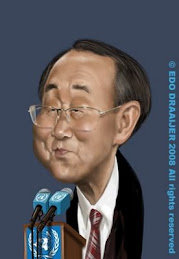
U.N. Judges Charge Ban Ki-moon with Power Grab, Distortions of Their Rulings

By George Russell


CLICK HERE TO READ THIS ARTICLE ON FOX NEWS: http://www.foxnews.com/world/2011/11/11/un-judges-charge-ban-ki-moon-with-power-grab-distortions-their-rulings/print#ixzz1dVIG0SQU


Little more than two years after United Nations Secretary Ban Ki-moon inaugurated a new justice system to safeguard employee rights, the judges he appointed to the main tribunal have unanimously charged that the U.N. chief is trying to “undermine the integrity and independence” of their court in a bid to crimp their powers.

The judges, members of the United Nations Dispute Tribunal, also charge him in an open letter to the U.N. General Assembly with offering a “misleading and one-sided” account of their judgments to the Assembly as part of the attempt to get his way. (Ironically enough, the letter was sent to the Assembly as required by protocol by Ban himself, as a document from the Secretary General.)

Ban’s intended changes in how the court operates, they say, “raise serious concerns regarding the respect for the rule of law within the Organization,” give “power without accountability” to a variety of U.N. institutions, remove important avenues of legal recourse for U.N. staffers and could make the exercise of the court’s recently enshrined authority “meaningless.”

A U.N. spokesman told Fox News that the Secretary General has “full respect for the independence of the judges,” and said Ban is simply trying to clarify some unforeseen complications of the U.N. legal appeals process and bolster the independence of other institutions that are supposed to protect employees, especially whistleblowers.

The dispute, couched in dense and arcane legal language, is still wending through the convoluted U.N. legislative process. The General Assembly’s legal committee has already declared that Ban’s changes “should not be taken up at this time” before bouncing the matter over to the powerful 5th, or financial, committee.

“The judges were quite right to object to several of the Secretary General’s proposals, which were ill considered and would have had the result of greatly delaying justice and depriving staff of certain rights to which they are entitled,” says Geoffrey Robertson, a distinguished British jurist and member of the U.N.’s own Internal Justice Council, which, among other things, picks judges for the U.N. Dispute Tribunal.

Robertson added his soothing judgment that “these are minor teething problems in a totally new system, and the lesson is simply that the Secretary General should consult more closely with judges and certainly with the Internal Justice Council before trying to tinker with it.” Overall, he says, the justice system “is working surprisingly well.”

Nonetheless, the muffled judicial push-and-shove is important for several reasons—not least the strong reaction of the independent judges. There are three full-time and two half-time judges attached to the Dispute Tribunal, along with three “ad litem,” or ad hoc judges helping to deal with case overloads. They are deliberately chosen from outside the U.N. system to help break what has been described as the U.N.’s incestuous “culture of impunity” which protected corrupt officials and other abusers of authority while punishing whistleblowers and others who bucked the system.

Moreover, their charges echo similar accusations of interference over the past two years from U.N. oversight bodies that are independent from Ban’s Secretariat, but depend on the Secretary General’s bureaucracy for institutional support. In both cases, Ban’s rationale was embedded in technical issues.

In July, 2010, Inga-Britt Ahlenius, the outgoing head of the U.N.’s watchdog Office of Internal Oversight Services (OIOS), which audits the Secretariat and investigates fraud and malfeasance, charged Ban with “undermining” her organization, while blocking for nearly 20 months her choose as head of OIOS’s sensitive Investigations Division. She also said Ban’s Secretariat was “drifting into irrelevance.”

Ban’s reason for rejecting Ahlenius’ choice was linked to his desire to put more women in the U.N. hierarchy.

Click here to read more on that story.

A little more than a year earlier, another watchdog institution, known as the Joint Inspection Unit (JIU), charged Ban in its annual report with an “illegal action” in demanding a bigger say in selecting candidates to become the JIU’s powerful executive secretary.

Ban got his way—once again, he said he wanted to promote more women-- and JIU’s independence, at least in terms of its reports, does not appear to have been affected: the unit has since issued a number of documents highly critical of U.N. operations
.
(Among other things, for example, the JIU last July charged that Ban’s choices for top appointments are shrouded in excessive secrecy, and that U.N. member states are kept in the dark about senior vacancies.)

Click here to read more that story.

The Dispute Tribunal judges, however, are mostly upset at changes that Ban wants to make in their rules of procedure. Among other things, Ban wants to suspend the Tribunal’s ability to enforce temporary judgments, known as “interlocutory orders” while they are being appealed to the U.N.’s highest judicial body, the seven-member United Nations Appeals Tribunal.
Click here to see the Judge's letter.

This change, the judges argue, would render the court toothless, especially when the temporary order granted what the judges call “interim relief,” for example when ordering the Secretariat to cease and desist from an action that judged illegal, invalid or retaliatory.

In other cases, where the judges had ordered Ban’s Secretariat or an accuser to produce a document or witness in response to charges of unjust treatment, for example, inability to enforce the order “would allow either party to paralyze the process” and make the court ineffective, the jurists said in their open letter.

For his part, Ban’s office told Fox News in response to a query that when the statutes governing the courts were written, they did not say what should happen when the court issues such an order, and argued that this was because, “it was not envisaged that the Dispute Tribunal would issue interlocutory orders.” Now the judges do so “frequently,” Ban’s office noted, while saying that the U.N. appeals court has struck down some as “unlawful.”

The jurists were also seriously aggrieved that Ban objects to their hearing appeals from some of the U.N.’s independent oversight institutions, including OIOS and the U.N. Ethics Office, which judges, among other things, whether the U.N. has retaliated against whistleblowers. The judges call the actions taken by these institutions against U.N. employees “administrative decisions,” meaning actions that fall under their jurisdiction.

Ban argues that since the institutions are supposedly independent from him, their decisions are not administrative and just not reviewable by the courts. “The exercise of judicial review over the actions of independent entities would have very real trade-offs for the manner in which these entities are able to conduct their functions,” Ban’s office told Fox News in a response about the issue.

Ban’s office argued that knowing they might have to testify in a U.N. court could even have a “chilling effect” on future whistleblowers who wanted to expose wrongdoing at the world body, and it should be up to the U.N. General Assembly to decide whether the courts had jurisdiction.

Click here to view Ban's full report.

Ban’s ostensible concern for whistleblower inhibitions was not perceived the same way by the Government Accountability Project (GAP), a Washington –based organization that protects such organizational dissidents, and was heavily involved in the original design of the U.N.’s whistleblower protection rules.

“We are really concerned about the Secretary General’s proposal,” said Shelly Walden, a GAP specialist who has monitored the U.N. judicial battle. “In the past whistleblowers had no day in court, and no protection.”

“The Secretary General has recently claimed that he aims to promote whistleblowing,” she added, “but his actions don’t meet his words.”

Where both sides in the judicial battle apparently agree, however, is that the Dispute Tribunal and its appeals counterpart are already overburdened. In his report on the issue, Ban pitches for a $1 million increase in the budget for the new system, to about $8.66 million, and add 26 additional support staff.

Whether that is likely to happen in the midst of a global economic crisis and heightened international skepticism about U.N. spending is an issue neither Ban nor the judges can decide.

George Russell is executive editor of Fox News and can be found on Twitter@GeorgeRussell.

Click here for more stories by George Russell.

Tuesday, 11 October 2011

Are donor contributions to the U.N. smart investments for the U.S.?


By

Published October 11, 2011

| FoxNews.com


Read more: http://www.foxnews.com/world/2011/10/11/are-donor-contributions-to-un-smart-investments-for-us/?test=latestnews#ixzz1aUvDMe6u

United Nations Building New York

Is the multibillion-dollar U.S. annual payout to the United Nations a good investment? The Obama administration says it is a smart move. The facts, however, suggest otherwise.

The smart investment claim was made most recently by Esther Brimmer, Assistant Secretary of State for International Organization Affairs, the branch of State that includes U.N. oversight, during last month’s opening session of the U.N. General Assembly.

While arguing that “the U.N. helps sustain the global economic landscape that U.S. companies depend on,” Brimmer also declared that “the U.N. spends hundreds of millions of dollars every year procuring goods and services from American companies. They spend more money here than in any other country in the world -- more than $1.5 billion last year alone.”

Summarized Brimmer in a State Department blog posting: “The time and money we put into the U.N. -- regardless of the broader contributions to our national health and security -- comes right back to us when the U.N. buys American goods and services.”

Click here to read the blog post.

The truth is, not so much.

Brimmer’s source was the annual U.N. compilation of its procurement activities worldwide -- the amount of money the sprawling global organization spends buying goods and services around the world.

According to the 2010 procurement summary, the U.S. did, in fact, get $1.5 billion in U.N. procurement contracts this year, making it the U.N.’s top source of supply in the world.

But when it comes to overall return on investment, the U.S. procurement bounty looks different --and worse.

According to U.S. government figures, Washington gave $7.7 billion to the widely varying branches of the U.N. global system last year -- meaning that for every dollar the U.S. put in, it got about 19.7 cents worth of procurement back.

Compare that, for example, with Britain, which also ranks traditionally just below the U.S. as a U.N. donor nation. According to British government figures, London contributed about $652.8 million to the U.N. system during its 2010-2011 fiscal year (at current exchange rates). Atop that, Britain contributed about $627 million to U.N. peacekeeping in 2010, for a total of about $1.06 billion.

But Britain got about $490 million in procurement business in 2010. That’s roughly 46.2 cents on every dollar given to the U.N. -- more than double the U.S. return, in Brimmer’s terms.

The British return on investment was also better than that of the French, who, according to their U.N. website, spent at least $1.3 billion on the U.N. in 2010, and took in about $443.8 million in procurement sales. That works out to about 34.8 cents per dollar spent. Even so, the French ratio is still nearly twice as good as its U.S. counterpart.

The only major developed country that gets a slightly worse procurement return on its U.N. investment isGermany, which contributed $618.7 million to the U.N. in 2009 (the most recent available year on the U.N.’s website,), plus another $577 million for peacekeeping. Total: $1.2 billion. According to U.N. procurement statistics, Germany sold about $181.2 million worth of goods and services to the U.N. in 2009, or about 15.2 cents on every dollar contributed.

On the other hand, the U.S. does much, much better than Norway, one of the other top contributors to the U.N. system, which handed more than $1.2 billion in 2008, according to the Norwegian government. The Norwegian share of peacekeeping expenses that year amounted to about $65.4 million. According to U.N. procurement statistics, Norway got $46.4 million in U.N. business that year -- or about 4 cents for every dollar spent.

George Russell is executive editor of Fox News and can be found on Twitter @GeorgeRussell.
Thursday, 7 July 2011

FOXNEWS: Even U.N. Admits That Going Green Will Cost $76 Trillion

Fox News - Fair & Balanced click here for this story

By

Two years ago, U.N. researchers were claiming that it would cost “as much as $600 billion a year over the next decade” to go green. Now, a new U.N. report has more than tripled that number to $1.9 trillionper year for 40 years.

So let's do the math: That works out to a grand total of $76 trillion, over 40 years -- or more than five times the entire Gross Domestic Product of the United States ($14.66 trillion a year). It’s all part of a “technological overhaul” “on the scale of the first industrial revolution” called for in the annual report. Except that the U.N. will apparently control this next industrial revolution.

The new 251-page report with the benign sounding name of the “World Economic and Social Survey 2011” is rife with goodies calling for “a radically new economic strategy” and “global governance.”

Throw in possible national energy use caps and a massive redistribution ofwealth and the survey is trying to remake the entire globe. The report has the imprimatur of the U.N., with the preface signed by U.N. Secretary-General Ban Ki-Moon – all part of the “goal of full decarbonization of the global energy system by 2050.”

Make no mistake, much of this has nothing to do with climate.

The press release for the report discusses the need “to achieve a decent living standard for people in developing countries, especially the 1.4 billion still living in extreme poverty, and the additional 2 billion people expected worldwide by 2050.” That sounds more like global redistribution of wealth than worrying about the earth’s thermostat.

That’s because it is. The report goes on and says “one half of the required investments would have to be realized in developing countries.” In other words, $38 trillion would go to the developing world.

The survey details where that money would go. “Survey estimates that incremental green investment of about 3 percent of world gross product (WGP) (about $1.9 trillion in 2010) would be required to overcome poverty, increase food production to eradicate hunger without degrading land and water resources, and avert the climate change catastrophe.”

So eradicating hunger and overcoming poverty are now part of the climate debate.

It’s also interesting to notice the escalating scale the U.N. is using for its costs. This is a 200 percent increase from the previous Stern Report, which called for 1 percent of global WGP. But that wasn’t enough so Stern revised his claim in 2008, warning there were “many ways of acting to make it more costly” and said 2 percent was needed. Apparently so. Now it’s 3 percent.

It wasn’t that long ago – Nov. 11, 2009 to be exact – when lefty writer Naomi Klein, author of "The Shock Doctrine: The Rise of Disaster Capitalism,” told readers the cost of going green was going to be $600 billion a year.

Eighteen months later, the price of our “one last chance to save the world” has increased $13 trillion – and that’s just over the next decade.

The Klein piece was controversial because she admitted the left was looking for the first world to pay a “climate debt,” what she described as “the idea that rich countries should pay reparations to poor countries for the climate crisis.” The new U.N. report doesn’t use those terms, but they are there in spirit.

The U.N. calls for a push toward the “green economy” even though it freely admits “there is no unique definition of the green economy.” The survey's introduction rationalizes the massive cost by explaining “the green economy concept is based on the conviction that the benefits of investing in environmental sustainability outweigh the cost of not doing so.” So, by that rationale, any cost is sustainable.

And, as in all things from the U.N., government is the solution: “Governments will have to assume a much more central role” in making the change to a green economy. Where there’s government, there must be control and “active industrial and educational policies aimed at inducing the necessary changes in infrastructure and production processes.”

Educational policies? They are just a start. Try energy caps “if, for instance, emission reduction targets cannot be met through accelerated technological progress in energy efficiency and renewable energy generation, it may be necessary to impose caps on energy consumption itself in order to meet climate change mitigation targets in a timely manner.”

That would lead naturally to “the prospect of ‘prosperity without growth,’” and even the U.N. admits that “may not be very appealing.” No matter. We’ll all have to accept that and the “major structural transformations of economies and societies.”

Some of those “societal transformations” include living in more urban areas, as the report went on to discuss the wonders of “Japan’s compact urbanization” and bemoan the cost of individual homes filled with furniture.

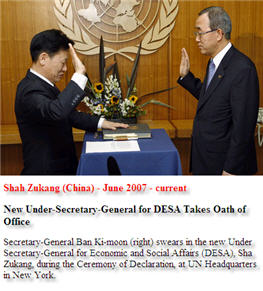
The report noted that all of this $76 trillion in spending in based on the “precautionary principle” decided at the 1992 United Nations Conference on Environment and Development in Rio de Janeiro. According to that principle, Under-Secretary-General for Economic and Social Affairs Sha Zukang wrote, “in the absence of scientific consensus that a particular action or policy is harmful to the public or to the environment, the burden of proof that the suspect action or policy is not harmful rests with the party or parties implementing it.” In other words, even if the U.N. is wrong on climate change, we should still spend $76 trillion to fight it.

Ironically, the report came out just one day after climate scientists were complaining that Chinese coal use was driving a temporary bout of “global cooling.” As the liberal Huffington Post explained, the cooling is from “all that sulfur pollution in the air from China's massive coal-burning, according to a new study.”

Dan Gainor is the Boone Pickens Fellow and the Media Research Center’s Vice President for Businessand Culture. He is a frequent contributor to Fox News Opinion. He can also be contacted on FaceBookand Twitter as dangainor.

Monday, 10 May 2010

World Health Organization Moving Ahead on Billions in Internet and Other Taxes

FOX News.com

The World Health Organization is moving full speed ahead with a controversial plan to impose billions of dollars in global consumer taxes on such things as Internet activity and everyday financial transactions like paying bills online — while its spending soars and its own financial house is in disarray.

The World Health Organization (WHO), the United Nations' public health arm, is moving full speed ahead with a controversial plan to impose global consumer taxes on such things as Internet activity and everyday financial transactions like paying bills online — while its spending soars and its own financial house is in disarray.

The aim of its taxing plans is to raise "tens of billions" of dollars for WHO that would be used to radically reorganize the research, development, production and distribution of medicines around the world, with greater emphasis on drugs for communicable diseases in poor countries.

The irony is that the WHO push to take a huge bite out of global consumers comes as the organization is having a management crisis of its own, juggling finances, failing to use its current resources efficiently, or keep its costs under control — and it doesn't expect to show positive results in managing those challenges until a year from now, at the earliest.

Fox News initially reported last January on the "suite of proposals" for "new and innovative sources of funding," prepared by a 25-member panel of medical experts, academics and health care bureaucrats, when it was presented of a meeting of WHO's 34-member Executive Board in Geneva.

Now the proposals are headed for the four-day annual meeting of the 193-member World Health Assembly, WHO's chief legislative organ, which begins in Geneva on May 17.

The Health Assembly, a medical version of the United Nations General Assembly, will be invited to "take note" of the experts' report. It will then head back with that passive endorsement to another Executive Board meeting, which begins May 22, for further action. It is the Executive Board that will "give effect" to the Assembly's decisions.

What it all means is that a major lobbying effort could soon be underway to convince rich governments in particular to begin taxing citizens or industries to finance a drastic restructuring of medical research and development on behalf of poorer ones.

The scheme would leave WHO in the middle, helping to manage a "global health research and innovation coordination and funding mechanism," as the experts' report calls it.

In effect, the plan amounts to a pharmaceutical version of the U.N.-sponsored climate-change deal that failed to win global approval at Copenhagen last December. If implemented as the experts suggest, it could easily involve the same kind of wealth transfers as the failed Copenhagen summit, which will send $30 billion a year to poor nations, starting this year.

The WHO strategy involves a wide variety of actions to transfer "pharmaceutical-related technology," and its production, along with intellectual property rights, to developing countries, according to a condensed "global strategy and plan of action" also being presented to the World Health Assembly.

Regional "networks for innovation" would be cultivated across the developing world, and some regions, such as Africa, would be encouraged to develop technology to exploit "traditional medicines."

According to the condensed plan of action being presented to the Assembly, a number of those initiatives are already well under way.

Click here to read the plan of action.

The rationale for the drastic restructuring of medical R and D, as outlined in the group of experts' report, is the skewed nature of medical research in the developed world, which concentrates largely on non-communicable diseases, notably cancer, and scants research on malaria, tuberculosis and other communicable scourges of poor countries. It cites a 1986 study that claimed that only 5 percent of global health research and development was applied to the health problems of developing countries.

(In dissecting contemporary medical R and D, however, the expert report glosses over the historical fact that many drugs for fighting communicable diseases in developing countries are already discovered; the issue in many cases is the abysmal living and hygienic conditions that make them easily transmitted killers.)

What truly concerns the experts, however, is how to get the wealth transfers that will make the R and D transfers possible — on a permanent basis. The panel offers up a specific number of possibilities.

Chief among them:
• a "digital" or "bit" tax on Internet activity, which could raise "tens of billions of U.S. dollars";
• a 10 percent tax on international arms deals, "worth about $5 billion per annum";
• a financial transaction tax, citing a Brazilian levy that was raising some $20 billion per year until it was canceled (for unspecified reasons);
• an airline tax that already exists in 13 countries and has raised some $1 billion.

Almost casually, the panel's report notes that the fundraising effort would involve global changes in legal structures — and policing. As the report puts it: "Introducing a new tax or expanding an existing tax may require legal changes, nationally and internationally and ongoing regulation to ensure compliance."

As a backup, the panel offers some less costly, voluntary alternatives, including "solidarity contributions" via mobile telephone usage, or set-asides on income taxes.

Yet another alternative: new health care contributions from countries such as China, India or Venezuela, or higher contributions from rich countries — neither idea looking likely in the current climate of international financial crisis. In the report's words: "channeling these resources in this way can only be achieved if there is political will to do so and a convincing case is made."

Click here to read the financing report.

As follow-up, the experts suggest that WHO promote each and every suggested approach for new financing, along with "regulatory harmonization and integration" in the developing world, "research and development platforms in the developing world," and new "product development partnerships" to kick-start the global medicines program.

Just as big an issue for WHO, however, may be whether it can adequately manage the money it is already getting — or trying to get — for its current planned needs.

Other budget documents intended for the World Health Assembly, and obtained by Fox News, paint a picture of an organization where:

• spiraling financial demands are beginning to outstrip the ability of member-nations to pay;
• outsized headquarters budgets, in contrast to the regional and country networks where WHO's public health work is largely done, are rising even faster than the overall budget; and
• efforts to control onerous staff costs are just getting underway.

Those challenges are laid out in WHO's proposed biennial budget for 2010-2011, which calls for a combination of mandatory and voluntary contributions from the world's nations — meaning, overwhelmingly, the three dozen richest ones — of $5.4 billion — a whopping 27 percent increase over the same initial draft figure for 2008-2009.

But that increase, large as it is, will likely be far less than WHO needs before the latest biennium ends. In 2008-2009, the initial $4.23 billion draft budget was "revised" to a final $4.95 billion during the two-year period, a 17 percent increase.

Using the same inflationary measure, WHO's spending could well climb to $6.3 billion before the end of 2011.

Click here for the draft 2010-2011 budget.

One of the biggest jumps would come in the spending centered on WHO's headquarters in pricey Geneva — a 44 percent climb in its share of program budgets, from $1.18 billion to $1.7 billion, even before any future "revisions."

WHO planners point to the shrinking value of the U.S. dollar, its budgeted currency, against the Swiss franc as a major factor, which they say has increased costs by 15 percent. But other factors include more meetings for WHO's governing bodies and salary provisions for the top officers of the WHO Secretariat.

According to documents presented to the program, budget and administration committee of WHO's Executive Board, headquarters costs for the organization have remained proportionately steady for years at almost 38 percent of WHO's spending, however much that spending has grown. The ratio is striking, since WHO devotes most of its efforts to improving health care conditions in the developing world.

The organization's stated goal is to spend only 30 percent of its program funding in Geneva, but the same planners think it is "unrealistic" to think WHO will reach that objective, even by 2013.

In foggy bureaucratic language, they declare that "a change that is too swift and radical will be disruptive to the entire function of the Organization or fail because of an insurmountable accumulation of practical problems of execution."

Translation: the WHO bureaucracy won't easily cooperate.

In a bid to get the head-to-tail ratio under better control, WHO's top managers have set ceilings for headquarters hiring, but these only went into effect this year. The hiring limits will not cut the Geneva head-count but limit its further growth — "an acknowledgement," the document says, "that staff numbers are the main driver of WHO's expenditures."

That combination of WHO's sharp hikes in costs and a grim economic climate have led to another major management problem: "continued disparities between the approved budgets and the available resources."

In other words, WHO's member states and donors are not paying up as fast as the organization is spending the money across its many and varied priorities, leading to budgetary juggling and behind the scenes efforts to get major donor countries to ante up future contributions in advance, and cough up more voluntary funds in the future.

In its planning committee documents, the WHO bureaucracy promises to get a better grip on its finances in the near future.

Among the cost management efforts will be higher levies on voluntary donations to cover WHO staff costs — higher administrative fees, in short — along with more voluntary and "fully flexible" donations that can be used at the management's discretion, rather than being earmarked for specific programs.

Click here for the resource management report.

It will be another year, however, before WHO's overseers will be able to see if its management juggling will bear adequate fruit.

All in all, that is not a confidence-building credential for an organization that is simultaneously trying to reorganize the world's medical research, development, production and distribution system — and make the world's consumers and taxpayers pick up most of the multibillion-dollar tab.

George Russell is executive editor of Fox News.