Showing posts with label Colum Lynch. Show all posts

Friday, 7 September 2012

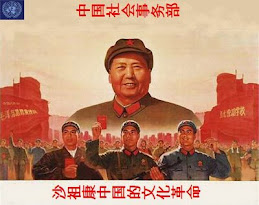
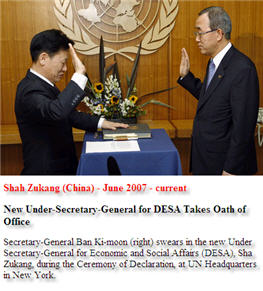
Wu Hongbo: A bolshevik propaganda style at the helm of UN-DESA

To read this article in full click here at Foreign Policy / Turtle Bay

Posted By Colum Lynch

Some high-ranking U.N. officials hired in the wake of Ban Ki-moon's re-election have been receiving something of a hero's welcome at Turtle Bay, marked by the solicitousness one would associate with, say, a visit by North Korean leader Kim Jong Un to a rural hemp factory.

The U.N. Department of Management (DM) and the U.N. Department of Economic and Social Affairs (DESA), issued internal memos last month detailing the debuts of their new bosses, undersecretary generals Yukio Takasu, a former veteran Japanese diplomat who once served on the U.N. Security Council, and Wu Hongbo, a former top official in China's foreign ministry, in their first three months of office, while taking note of the incredible pride their staff take in serving the United Nations...

To read this article in full click here at Foreign Policy / Turtle Bay

Monday, 23 May 2011

Israel to UN: You say innocents, I say villains

click here to view story on Foreign Policy

Posted By Colum Lynch

Israel's deputy foreign minister, Danny Ayalon, today lodged a complaint against the U.N.'s top humanitarian relief official Valerie Amos, following Amos' highly critical assessment of Israeli policies in the Palestinian territories and along its borders.

Amos, a former British politician who serves as the U.N. Undersecretary General for Humanitarian Affairs, issued a series of highly barbed public statements and tweets criticizing Israel's treatment of Palestinians during a four-day visit to the Gaza Strip and East Jerusalem.

She also took issue with Israel's shooting deaths of about 15 "innocent" Palestinians who crossed the defacto border into Israel Sunday from Syria and from southern Lebanon. Thousands of Palestinians sought to cross the borders to commemorate the 1948 Naqba, or catastrophe, which marks the displacement of Palestinians during the birth of the state of Israel.

"I am extremely concerned at the level of violence today, and at the number of deaths and injuries in the region" Amos said on Sunday. "The situation cannot continue in this way. It is innocent people who are losing their lives."

Israel maintains that the border-crossings were instigated by the Syrian government as a way of distracting attention from its bloody crackdown on nation-wide protesters challenging the government rule. The White House has stated that Israel has the right to defend its border from unauthorized border crossings, and that Syria and Lebanon have an obligation to prevent them.

In a meeting today with Amos, Ayalon challenged her characterization of the victims as innocent. "Those from enemy countries who breach our borders while using violence and calling for Israeli's destruction, cannot be considered innocent, but an immediate and present danger to the citizens of Israel," he said, according to a statement released by the Israel foreign ministry. "Israel has the right and duty, as does any nation, to defend itself and its borders. It is disappointing that the person in charge of humanitarian affairs at the UN requires explanations on why defensible borders are a fundamental right of Israel's citizens."

Ayalon also took issue with Amos agency's characterization of the plight of Palestinians, saying "there is not now, nor has there been, a humanitarian crisis in the Palestinian territories, these reports are inflaming the atmosphere and hurting regional stability."

Amos, meanwhile, faulted what she called restrictive Israel building practices which prevent Palestinians from rebuilding crumbling schools and other vital facilities in Israeli controlled lands. "Palestinians are utterly frustrated by the impact of Israeli policies on their lives. They are evicted from their homes Their homes are regularly demolished," Amos said. "I don't believe the people of Israel have any idea of the way planning policies are used to divide and harass communities and families. They would not like to be subjected to such behavior."

Follow me on Twitter @columlynch

Friday, 7 January 2011

Ban Ki moon's stealth reelection campaign

Click here for story on Foreign Policy

In another sign of Ban Ki moon's intent to run for a second term as U.N. Secretary General, the U.N. chief's allies have sought to douse public speculation in his native South Korea that he may consider a run for president there in 2012.Former South Korean Prime Minister, Han Seung-soo, a close ally of Ban, told Yonhap News agency that recent opinion polls including Ban as a potential presidential candidate may harm his reelection campaign at the United Nations. "It is our duty to free Secretay General Ban from domestic politics so he can serve the world," said Han. "Repeated mentions of his name in domestic politics would be disadvantageous for him as he performs his role as the U.N. secretary general."The Korea Herald contended that Ban has "expressed displeasure" over media surveys listing him as a presidential aspirant. "It was extremely unfortunate that he was named as a presidential contender in opinon polls despite having repeatedly said that he has no intention to run in the presidential elections," the Herald quoted a top U.N. official saying last week.Ban's five year term expires at the end of 2011. In his year end press conference last month, Ban declined to declare his intention, saying he would do so soon. But Ban has been sending strong hints that he has every intention of doing so. So, what's he waiting for? Follow me on Twitter @columlynch

Monday, 3 January 2011

Did Ban Ki moon just announce his plans to seek a second term as U.N. secretary general?

click here to view this on ForeignPolicy

Posted By Colum Lynch

Ban Ki moon has never been known as a straight talker. But tonight he seemed to reach new heights of circumspection, seemingly declaring his intention to run for a second five-year term as secretary general without actually saying so.

The revelation was buried in an official U.N. readout of a New Year's day exchange Ban had with South Korean president, Lee Myung-bak. In it, Ban offers his best wishes to the South Korean president-- the only leader to be so honored-- underscoring the importance the U.N.'s South Korean secretary general continues to place in maintaining close ties with the government that helped promote his rise to the world's top diplomatic job.

Ban's readout--which was issued Saturday evening without fanfare and while most of the press corps was on holiday -- seemed innocuous enough on first glance. Ban praised Seoul for its "active contribution to the work of the United Nations, including through an increase in overseas development assistance and greater participation in peace operations, as well as to global efforts to address climate change and promote green growth," according to the readout. Ban also lauded Lee for his "successful" hosting of a G-20 summit and for South Korea's continued "economic and social development" in 2o10.

For good measure, the readout notes that Ban and Lee discussed the crisis on the Korean peninsula. Ban -- who has been seeking a mediation role there since his first months as secretary general-- said he appreciated Lee's recent decision to try to resolve the nuclear standoff through the resumption of six-nation political talks, a move that effectively sidelines the U.N. Still, Ban appeared hopeful, offering once again to "provide any assistance, as appropriate, in facilitating peace and stability in the region in close coordination with the concerned countries."

But down in the final sentence of the readout, Ban's office blandly notes that the "secretary general looks forward to the 2012 Nuclear Security Summit to be hosted by the ROK[Republic of Korea], an event which would significantly contribute to strengthening the global nuclear non-proliferation regime." A careful reader will recall that Ban's first five-year term expires at the end of 2011, meaning he would need to be reelected in order to attend the Korean summit as secretary general.

Although Ban has signaled for months his intention to run for a second term, he has been declined to publicly announce his plans. Pressed on his intentions last month during a year-end press conference, Ban appealed for patience but said he would make his intention known soon. I'm not sure whether this counts.

Follow me on Twitter @columlynch

Tuesday, 14 December 2010

WikiLeaks exposes U.S. strategy at the United Nations

click here to view this on ForeignPolicy


Posted By Colum Lynch

WikiLeaks has released its first confidential cable written by diplomats from the U.S. mission to the United Nations. While the December 2009 cable -- which discusses U.S. efforts on a range of issues before the U.N. General Assembly -- provides no major news revelations, it contains some valuable insights into the way America conducts its business here.

The confidential U.S. diplomatic communication -- which was approved by U.S. ambassadorSusan E. Rice -- shows how reliant the U.S. is on its allies, particularly in Europe, to take the lead on politically sensitive issues like the promotion of human rights, where the U.S. often faces criticism for its military and detention policies. The cable credits the European Union with "collaborating pragmatically" with the Obama administration on its top priorities, including efforts to require emerging economic powers to pay a larger share of the U.N.'s administrative and peacekeeping costs, and to adopt U.N. resolutions criticizing the human rights record of Burma, Iran, and North Korea.

The EU, led by Sweden, also helped Washington fend off efforts by an influential alliance of developing countries -- known as the Group of 77 -- to adopt resolutions that would increase American financial burdens, including a draft resolution affirming a right to economic development.

The EU "responded with alacrity to new U.S. flexibility, particularly on arms control and economic/social issues," according to the cable. "The Swedish ambassador himself repeatedly engaged with G-77 colleagues to sway votes."

The cable, however, also singled out areas where key European powers refused to budge, including its annual support for a General Assembly resolution condemning the U.S. embargo against Cuba: "Spain was a particularly tenacious critic of our Cuba policy." It also expressed frustration with the failure of the EU, despite strong support from Britain, France, and the Netherlands, to significantly weaken a raft of nine pro-Palestinian resolutions that criticize Israel each year. "The EU's annual negotiation of these nine drafts... improved marginally.... The vote outcomes remained lopsided."

On the whole, this U.N. cable was certainly more businesslike than many of the most dramatic reports flowing out of U.S. embassies around the world. But I anticipate that future releases may provide sharper insights into many of the U.N.'s more colorful personalities. Perhaps they will even show us what Rice really thinks about U.N. Secretary General Ban Ki-moon.

Follow me on Twitter @columlynch.

Sunday, 12 December 2010

The U.N.'s battling bigwigs

click here to view this on ForeignPolicy

Posted By Colum Lynch

Inga-Britt Ahlenius, the former U.N. chief of internal oversight, penned a scathing end-of-mission report last July that accused U.N. Secretary-General Ban Ki-moon of undermining her efforts to rein in corruption and leading the U.N. into an era of decline. The Swedish auditor's report -- which was first reported by Turtle Bay -- produced a mini-crisis for the U.N. chief and set the stage for a bitter feud between Ahlenius and her former colleagues in Ban's executive suite.

This week, Thalif Deen, the U.N. reporter for Inter Press Service, obtained a written response to Ahlenius from Vijay Nambiar, Ban’s chief of staff, that charges Ahlenius with resorting to "misrepresentation of the record and distortion of fact" and adds that her report "raised questions of basic integrity and professionalism."

In a rebuttal, Ahlenius countered that it was "outrageous and insolent" of Nambiar to question her integrity. In a section of the letter titled "Kill the Messenger," she recounted a conversation with an unidentified former U.N. official who "wanted to warn me against acts of retaliation from people in the 'circle around the SG'" and that "they would spare no effort to hit and hurt me in retaliation."

The letters tread some of the same ground that marked the public debate between Ahlenius and top U.N. officials last summer. But they provide a raw firsthand account of one of the most bitter feuds in the U.N. top ranks. It's worth the read. Ahlenius, meanwhile, is preparing to write a book that will revisit her strained relations with her former U.N. boss. I don't expect it to be polite.

Follow me on Twitter @columlynch

Thursday, 9 December 2010

U.N. rights chief slams China, defends Assange

click here to view this on Foreign Policy


Posted By Colum Lynch

Navi Pillay, the U.N. High Commissioner for Human Rights, pressed China to release this year's Nobel Peace Prize winner Liu Xiaobo, expressing hope that China will "come to recognize" the positive contribution the pro-democracy activist can make on Chinese society.

In a rare, wide-ranging press conference in Geneva, Pillay presented the U.N.'s strongest public criticism of China's imprisonment of Liu, who is serving an 11-year jail sentence for drafting the pro-democracy Charter 08 manifesto. Pillay also scolded China for placing Liu's wife, Liu Xia, under house arrest "that in my view is in contravention of Chinese national law."

The remarks by the South African rights advocate bore a stark contrast to U.N. Secretary GeneralBan Ki-moon's highly circumspect comments on Liu's selection as the 2010 Nobel laureate. To date, Ban has never publicly called for his release, spoken out against the house arrest of his wife, or even officially congratulated him on the prize. Ban did not raise the matter in private talks with Chinese leader Hu Jintao, reserving discussion of the politically delicate matter for talks with lower-level Chinese officials.

Chinese offficials have responded to the Nobel Committee's decision to honor Liu, whom they consider a criminal, by lobbying foreign governments not to attend this week's award ceremony. "China's foreign ministry has boasted that the peace prize has been discredited because a large number of countries agree with China and will boycott the ceremony," wrote Keith Richburg of the Washington Post. "So far, China has listed 18 other countries not attending, including fellow communist regimes Cuba and Vietnam; Arab monarchies and authoritarian regimes includingSaudi Arabia, Egypt, Morocco, and Tunisia; and China's allies Venezuela, Pakistan, Sudan, and neighboring Russia and Kazakhstan. Iran, Colombia and Ukraine also said their ambassadors will not attend."

Beijing has also mounted a crackdown on Chinese activists and critics inside China. Pillay said that she was "dismayed" by the recent restrictions China has placed on a "widening circle" of activists and critics of the government. "In recent weeks at least twenty activists have been arrested or detained and more than 120 other cases of house arrest, travel restrictions, forced relocations and other acts of intimidation," she said. Pillay defended her decision not to attend the Nobel award ceremony, saying that she never received a formal invitation to the event from the Nobel Peace Prize organization.

Pillay came under fire from Yang Jianli, a U.S.-based Chinese dissident and friend of Liu Xiaobo, who said that the rights leader had rejected an invitation to attend the meeting. At the time, Pillay's spokesman defended her decision not to go on the grounds that she had a previous obligation to host a Human Rights Day event in Geneva on the same day.

Pillay also weighed in on the mounting WikiLeaks controversy, decrying the efforts of politicians and other government officials to "pressure" banks, Internet providers, and credit card companies to cut off Wikileaks, saying such measures ran afoul of free-speech protections. "I am concerned about reports of pressure exerted on private companies including banks, credit card companies and Internet service providers to close down credit lines for donations to Wikileaks, as well as to stop hosting the website," she said.

"Taken as a whole [such measures] could be interpreted as an attempt to censor the publication of information thus potentially violating WikiLeaks right to freedom of expression. If WikiLeaks has committed any recognizable illegal act then this should be handled through the legal system and not through pressure and intimidation."

The remarks follow a high-level campaign, first initiated by Sen. Joseph Lieberman, to pressure companies, universities, and other institutions to prevent Wikileaks from disseminating confidential cables. A group of anonymous computer "hacktivists" have retaliated by mounting cyber attacks on the websites of institutions that they believe have been hostile to WikiLeaks founder Julian Assange.

"This is truly what media would call a cyber war; it's just astonishing," Pillay said. "The WikiLeaks case raises complex human rights questions about balancing freedom of information, the right of people to know, and the need to protect national security or public order. This balancing act is a difficult one... So who is best to judge or strike at the balance, but courts of law?"

Pillay said the WikiLeaks documents have provided troubling new evidence that the Obama administration "knew about the widespread use of torture by Iraqi forces and yet proceeded with the transfer of thousands" of Iraqi detainees from U.S. custody to Iraqi custody between 2009 and 2010. "This could potentially constitute a serious breach of human rights law." She said she supported the efforts of U.N. human rights researchers who are seeking clarification from the U.S. and Iraqi authorities on the use of torture. She urged all to investigate the reports "and bring to justice those responsible for human rights abuses."

Follow me on Twitter @columlynch.